Chicken Noodle Soup

Chicken Noodle Soup

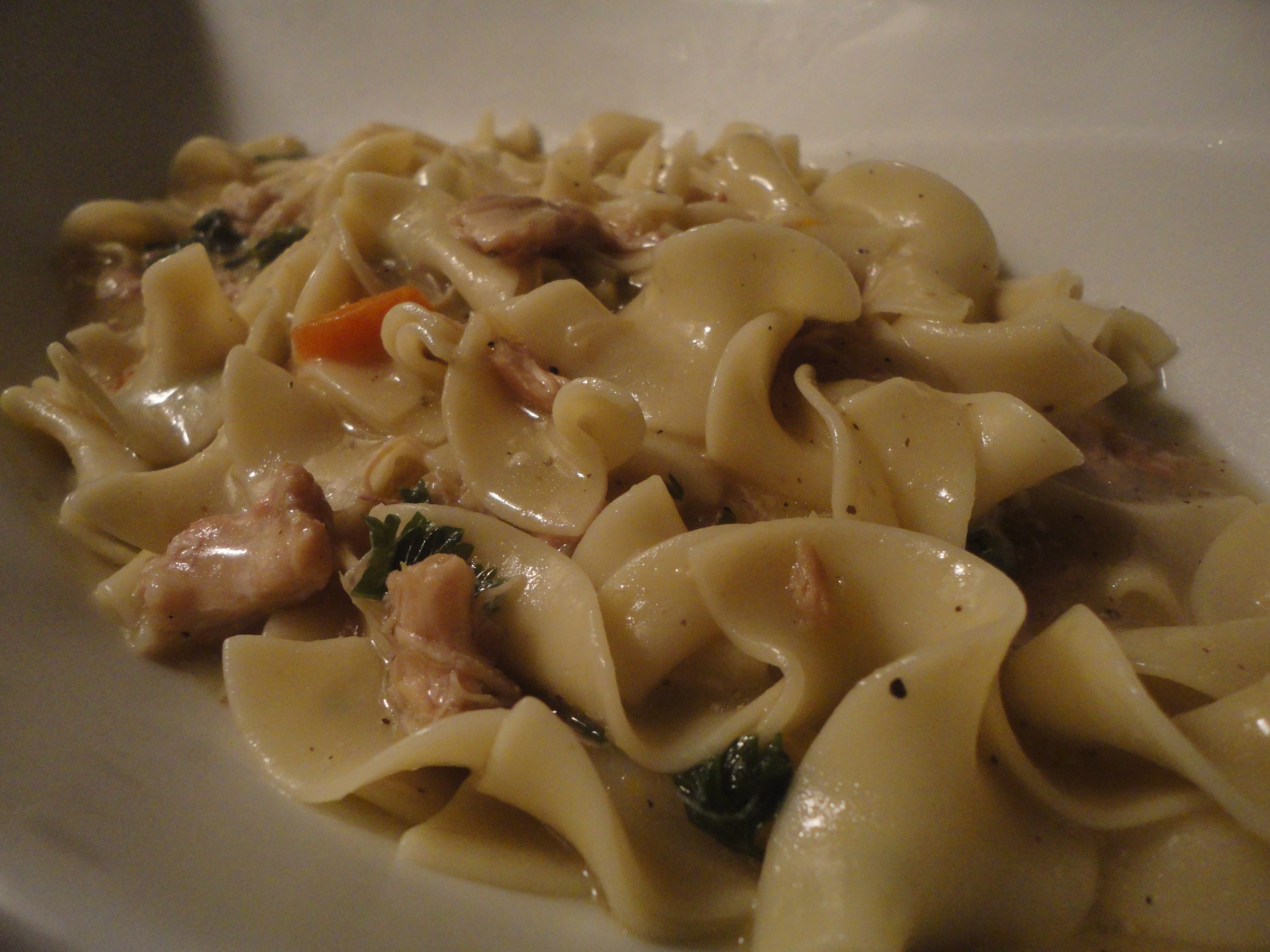
It was a cool, rainy September day yesterday and I was definitely feeling some good ‘ole comfort food… So I decided to make some chicken noodle soup. Here’s the recipe, enjoy!

Note: Normally I would make my own chicken stock but unfortunately I didn’t think far enough in advance and there wasn’t enough time. At some point in the near future I will post how to make your own stock, but in a pinch store bought stock serves the purpose, though it’s not as rich in flavor.

Serves 6-8

Ingredients:
3tbsp Olive Oil
2c White Onion, sliced
3 Cloves Garlic, chopped
1 1/2c Carrots, diced
1 1/2c Celery, diced
8 Boneless/Skinless Chicken Thighs
1c Dry White Wine
8c Chicken Stock + 3tbsp Chicken Stock for Slurry
8c Water
12oz Egg Noodles
2tsp Salt, broken into 1tsp and two 1/2tsp portions
2tsp Ground Black Pepper, broken into 1tsp and two 1/2tsp portions
2tsp Garlic Powder, broken into 1tsp and two 1/2tsp portions
3tbsp Cornstarch
4tbsp Unsalted Butter
3/4c Fresh Parsley, chopped

In a large pot heat the olive oil on medium heat, add the onion, garlic, celery and carrots and season with 1/2tsp each of salt, pepper and garlic powder. Cook on medium for 3 minutes to let the vegetables sweat. Increase the heat to high, add the chicken thighs and once again season with 1/2tsp each of salt, pepper and garlic powder, cook for 5 minutes turning the chicken halfway through. Still on high heat add the white wine, allow to reduce by half. Add the chicken stock and water, along with 1tsp each of salt, pepper and garlic powder. Bring to a boil then reduce the heat to low and simmer for two hours, stirring periodically. Towards the end of the two hours the chicken should break up while stirring.

After two hours it’s time to make the slurry. In a bowl whisk together 3tbsp of cornstarch and 3tbsp of cold chicken stock and whisk vigorously. The slurry is used to thicken the soup. Add the slurry to the soup and increase the heat to high. Bring the soup to a boil and maintain it for 3 minutes to burn off the cornstarch flavor from the slurry, then reduce the heat back to low. Add the egg noodles and chopped parsley, simmer for 20 minutes, stirring periodically. Add the unsalted butter and stir until melted. Taste to make sure the soup is seasoned to your liking… and that’s it, you’re done. Serve it up.

Bon Appétit!

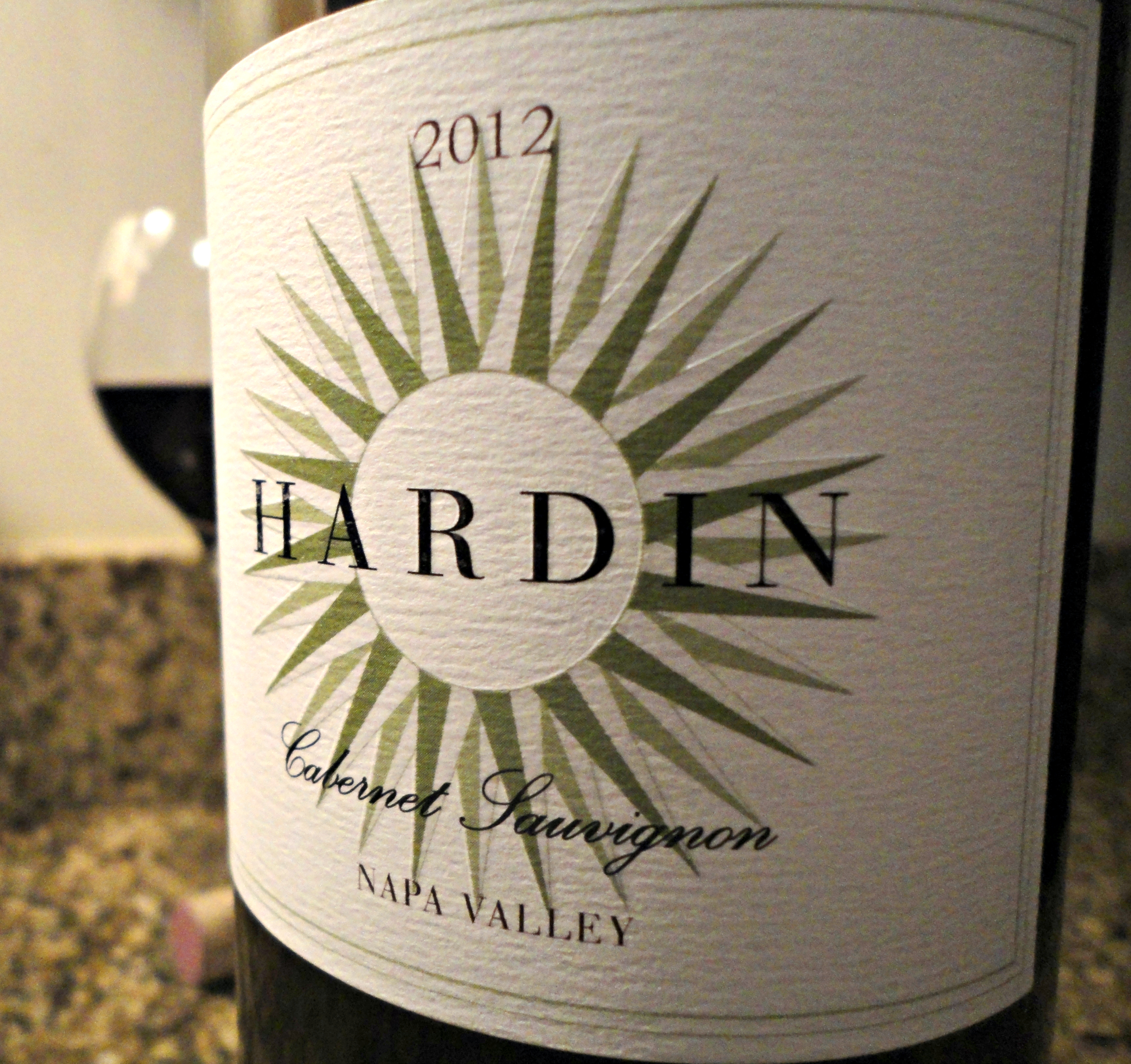
Wine Review – 2012 Hardin Napa Cabernet Sauvignon

hardin

Well, the weather is starting to turn and with it most people’s palate… As the temperatures drop wine drinkers en masse set aside their rosés and crisp whites and move into the realm of big reds. With that being the case I figured that a Cabernet Sauvignon from Napa would be a perfect direction to take my newest “A wine you should know…” article.

Hardin is the baby of Douglas Polaner, owner of Polaner Selections, one of the top fine wine importers in the United States who also distributes wines in two of the country’s top markets, New York and New Jersey. In the summer of 2005 Doug was in Napa visiting a number of producers that he represents in his portfolio, and many of them were in the process of bottling their 2003 vintage Cabernets. He couldn’t help but notice that at every winery he visited there were barrels set to the side and were not being used for bottling. Finally after the third or fourth visit he finally asked the winemaker at his current stop, “Everyone I visit have barrels set aside that they’re not using… What gives?” (Not necessarily an exact quote, but you get the idea). The winemaker explained that the juice in the barrels was quite good, but unfortunately not quite up to par for their wines…

Now before you jump to any conclusions, let me give you some perspective. The wines from the wineries that Doug was visiting that day have a retail range of $60-200 per bottle, and because of this they need to be very selective about the juice they put in said bottles!

So, logically, Doug’s next question was “Well what are you going to do with the ones you don’t use?” (again, not necessarily his exact words, lol). The winemaker shrugged (I imagine) and said that they’d put the wine up for sale and that someone would buy it and use it towards their own labels and that those wines would likely sell in the $40-70 range on the shelf (This is called “sourcing wine”, which is very common in California. Only a small percentage of wineries in the market are utilizing juice solely from their own vineyards, if they even have vineyards at all.). Well, Doug mulled over what the winemaker just said and a proverbial light bulb went on over his head… Why let other wineries come along and buy this great juice when he could!?

And that, my friends, is how Hardin was born. Doug purchased a number of the surplus barrels from these extraordinary producers and worked in collaboration with them to make a wine that was his own. The first vintage was 2003, in which roughly 170 cases were made, and the wine was an immediate cult success and sold out almost instantly. Every vintage since production has been increased slightly to meet the growing demand, and it still is never enough. The current vintage, 2012, has the highest production of any Hardin vintage ever, with approximately 3,000 cases made. With that type of growth, 170 to 3,000, you would think that the quality of wine has fallen off… but the exact opposite has happened. The wine has gotten better and better over the years. Doug is still sourcing from those same high end producers, he’s simply buying more from them than he was originally.

The goal behind Hardin was, and continues to be, to create a Napa Cabernet that drinks like a $50+ bottle (retail), but costs less than $30, and boy oh boy did they hit that nail right on the head.

Alright, let’s talk about what you can expect from the 2012 vintage of Hardin.

The wine is a blend of 82% Cabernet Sauvignon, 15% Merlot, 2% Petit Verdot and 1% Cabernet Franc… Ok, so right now some of you are reading this going “Hold on a second, that’s not all Cabernet!?” In the state of California a wine only needs to be 75% of a particular varietal to be able to call it as such. So as long as there is 75% Cabernet in the bottle, it can be labeled as a Cabernet Sauvignon, and there is no requirement that the other varietals utilized be referenced on the front or back labels. Blending other varietals into Napa Cabernets is the norm, not the exception. There are very few Napa Cabs on the market that are 100% Cabernet Sauvignon. In terms of aging, Hardin sees 14 months in French barrel, 33% new.

In the glass you’ll find a full bodied wine of dark purple hue. On the nose are aromas of black cherry, cassis, dried herbs, rose petal and faint oak. On the palate the wine is beautifully structured with a moderately soft opening leading into an explosive mid-palate with notes of cassis, black fig, tobacco, black tea and ground peppercorn, framed by subtle acidity and an assertive tannic backbone, with a long, lingering, and slightly warm finish. At 14.1% alcohol this wine is a refreshing departure from the masses of high alcohol, overblown Cabernets that the region has become known for, as is the minimal use of new barrels, with barely any oak present on the palate.

The 2012 vintage in Napa has proven to be exceptional, and Hardin’s bottling has certainly followed suit. This is a wonderful wine by Douglas and his collaborators (who I cannot name), and at the price point it goes from “wonderful” to “extraordinary”. The wine is ready to drink now, but I plan on setting a number of bottles aside to see how it evolves over the years. I would recommend that you do the same. Don’t be surprised to see a follow up “library” article on this vintage of Hardin years from now!

Score: 93+
Retail: $24-30
Consumption: Now-2025

A Play on Sausage & Peppers (w/ wine pairings)

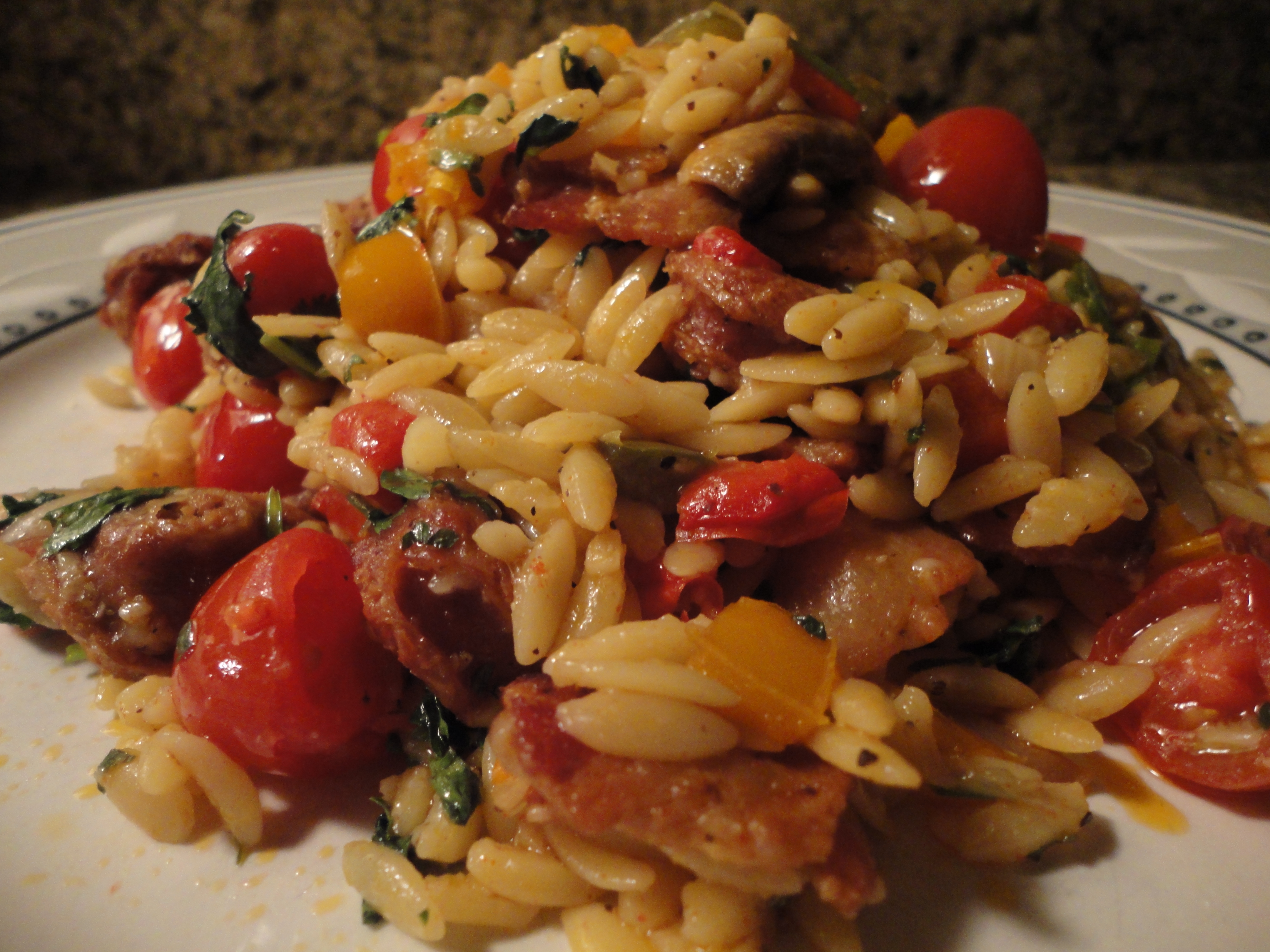
A play on sausage and peppers...

The other day I was tasting some wines with a couple of friends, and one of them pulled out a Tupperware container filled with a dinner that his wife packed for him (aw, how cute). He heated it up and started eating away, and it smelled absolutely delicious. So of course I asked the obvious question, “Hey man, whatcha got there?” Turns out it was a sausage and pepper dish mixed with orzo that his wife regularly makes. He was nice enough to give us a taste and it was fantastic. The sausage was tender, the peppers still had some crunch, it was seasoned perfectly… but the thing that struck me the most was that I had forgotten how much I love orzo! I knew right then and there what I was making for dinner that night. Thanks Cheryl S. for the inspiration, and if all of your food tastes that good your husband is one lucky guy!

So here is my take on Cheryl’s sausage and peppers, but of course I changed things around a bit to make it a little different.

Serves 4

Ingredients:
1 1/2c Orzo
1lb Raw Chorizo, sliced
3/4c Orange Bell Pepper, diced
3/4c Red Bell Pepper, diced
1/2c Red Onion, sliced
1/3c Jalapeno, seeded and diced (or leave the seeds in if you want the dish to be spicy)
2 Cloves of Garlic, chopped
1c Cherry Tomato, halved OR 1c Plum Tomato, diced
1/3c Fresh Parsley, chopped
1/3c Fresh Cilantro, chopped
1tsp Salt, two 1/2tsp portions
1tsp Ground Black Pepper, two 1/2tsp portions
1tsp Garlic Powder, two 1/2tsp portions
1tsp Paprika, two 1/2tsp portions
2tbsp Grated Parmesan
1/2c Chicken Stock
1tbsp Olive Oil

Bring a pot of salted water to boil, but do not drop in your orzo until I say!

Ok, so this one is nice and simple. In a sauté pan heat the olive oil on high, once hot add the chorizo. When the meat starts to brown add the onion and garlic and reduce the heat to medium, sauté for 2 minutes. Add the diced bell peppers and jalapeno, a half teaspoon each of salt, black pepper, garlic powder and paprika, and the chicken stock. Stir together well, reduce the heat to medium low, and simmer for ten minutes. Drop the orzo in the boiling water once you begin to simmer the chorizo and veg, cook for one minute less than the package calls for. Once cooked drain the orzo and add it to the simmering sauté pan along with the remainder of the seasoning, as well as the tomatoes, chopped parsley and cilantro. Stir together well, increase the meat to medium-high, and cook for an additional 3 minutes. Just before plating stir in the grated parmesan cheese… And that’s it, you’re all set. Wasn’t that easy!?

So let’s talk vino. You really need to go to two opposite ends of the wine spectrum on this dish. You either need to go with something white, light and partially sweet to help cut through the spice and heartiness of the dish… OR you need to go with something big and red that’s bursting with fruit and spice notes that with work hand-in-hand with the dish. Anything in between and the wine will be overwhelmed by the food. Here are my recommendations…

Domaine Huët Vouvray Demi-Sec Le Haut-Lieu , Loire, France Domaine Huët is the most storied name in Vouvray. The winery was founded by Victor Huët in 1928 and immediately established itself as the standard bearer of the appellation. While a number of producers in recent years have made a go at Huët’s title, no one has been able to wrest it from them. They are simply the best (cue Tina Turner). Their Demi-Sec from the Haut-Lieu vineyards is almost life changing, yeah, that good. The wine is medium to full bodied, with subtle notes of citrus zest, white peach, honeysuckle and crushed granite framed with a perfect harmony of citrus acidity and honeyed sweetness. Only 1,500 cases are made per vintage but despite this fact there is pretty strong distribution of the wine throughout the US and you should be able to get your hands on a bottle. Or, as I would recommend, buy every one you can find! Another beauty of this wine is that it can be laid down for another 15-20 years, and it should only get better! PP Score: 94 (Retail $34-40) *Certified Biodynamic

Boundary Breaks Riesling No.239 Dry, Finger Lakes, New York – Boundary Breaks is a newly established winery on the eastern shores of Seneca Lake in the Finger Lakes, and in my opinion, they have immediately established themselves as one of the top producers in the region. They are only in their second vintage, and the wines are beyond gorgeous. Bruce Murray’s dream was to create world class Riesling from New York State that could stand up to the top wineries of the Mosel and Alsace… Mission accomplished sir! So their No.239 Dry (No.239 referring to the Geisenheim 239 Riesling clone used for this bottling) is not an overly sweet Riesling, with only 0.6% residual sugar. It is beautifully floral and bright, but still has a slightly fuller mouth feel. On the palate you’ll find notes of Meyer lemon, orange blossom honey and white peach, as well as hints of smoke, tea leaves, and crushed granite. Production on these wines is TINY, with only 350 cases made of the No.239, so needless to say it’s going to be a challenge to find outside of New York… but for the rest of you there are a handful of boutiques that are selling the wine online, just let your fingers do the walking. And if you want to learn more about Bruce and BB, check out their website, it’s pretty awesome! PP Score: 91 (Retail $16-20)

Limerick Lane Zinfandel, Russian River, California – Limerick Lane is a winery resurrected, now under the ownership of Jake Bilbro, with his brother Scot making the wines. 2011 is the first vintage released by the Bilbro’s, and they really hit the ground running. Up front is a beautiful blend of dark berry, tart cherry and ripe raspberry, then leading into the mid palate you get this completely out of left field zing of bracing acidity with undertones of churned loam and anise, with a finish redolent with freshly crushed pink peppercorn and hints of clove, accompanied by subtle tannins, oak and the slightest heat. This is a wine that you should allow to breathe for at least 30 minutes before serving, preferably longer. PP Score: 93 (Retail $32-36)

Click here for more information on Limerick Lane.

Shebang! Red, California – Shebang! is a fun side project of Morgan Twain Peterson, the owner and winemaker of Bedrock Wine Company, as well as partner of the new label Under The Wire that has already developed a serious cult following (they couldn’t even accommodate everyone that signed up for their mailing list!). Shebang! was created by Morgan so he could offer consumers a wine that is still made with the ideals and care of his Bedrock and UTW wines, but with a much more wallet-friendly price tag. This current cuvee is a blend of Zinfandel, Grenache, Alicante, Petite Sirah and Sangiovese (I wouldn’t be surprised if there is more since Morgan has upwards of 30 different varietals growing in his vineyards) with an average vine age around 100 years. The wine is medium-to-full bodied with a dark ruby hue. On the palate you’ll find notes of dark cherry, bramble fruit, black pepper, and subtle oak framed by mild acidity and silky soft tannins, leading to a moderate finish. This is a lot of juice in the bottle for the price… PP Score: 90 (Retail $12-15)

Click here for more information on Shebang!, and here for an article that discusses Bedrock Wine Company. 

So there you have it, my play on sausage and peppers and the wines I recommend with the dish. I hope you’ve enjoyed the read, and I hope you’ll try the recipe and the wines. Thanks again to Cheryl S. for the unknowing inspiration… lol. As always, more content is en route. In the meantime, crack open a bottle of something awesome, sit back, and relax. Life is short, enjoy it!

Fried Calamari Salad (w/ wine pairings)

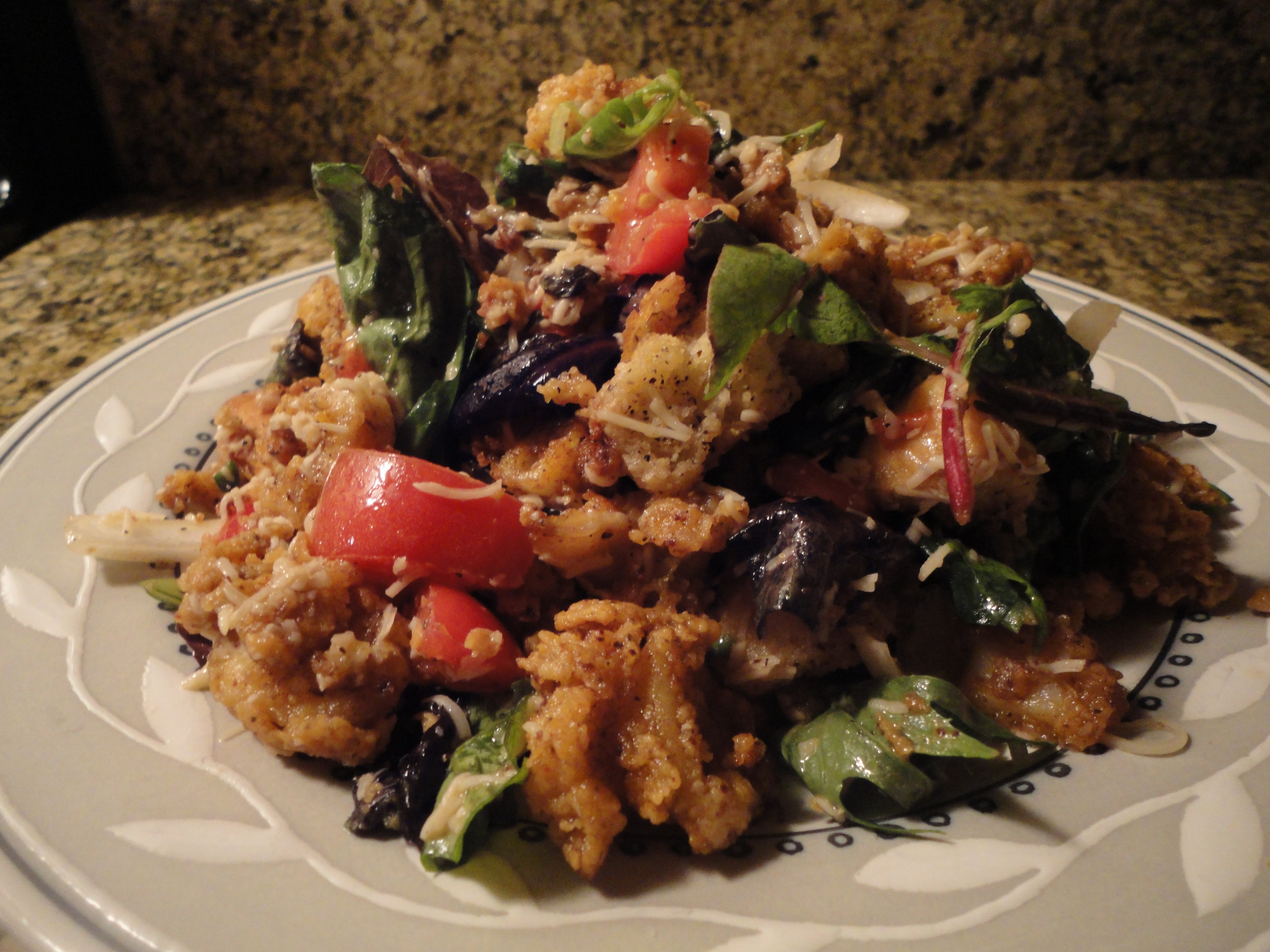
Fried Calamari Salad

While I feel blessed that after fifteen years I managed to escape the restaurant industry, every now and again I can’t help but miss it… Not the hours, nor the mind numbing insanity of dealing with the general public for a living, but the camaraderie among the staff (people that have worked together at restaurants are akin to soldiers that were on tour in hostile territory together, it’s a bond that is never broken), and most definitely the food. So the other day I was having one of my nostalgic moments and I remembered a dish that I always ordered between shifts when I worked doubles (otherwise known as the “I hate my life shift”) at a restaurant called Café Colore… Their Fried Calamari Salad. The juxtaposition of having something salty and rich like fried calamari alongside crisp greens and vegetables, all brought together with the sweetness and acidity of a balsamic vinaigrette, is sheer perfection. When you are talking about dishes that are balanced and harmonious and delicious, this is near the top in my book.

Below is the recipe and wine pairings… enjoy.

Serves 4

Ingredients:
1 1/2lb Fresh Calamari, washed, cleaned and sliced into rings/tentacles
5oz Mesclun Greens (also known as a Spring Mix, 5oz is the typical size of a bag)
2c Croutons
2c Plum Tomato, diced
1c Sweet White Onion, sliced
6oz Shredded Mozzarella
1tbsp Grated Parmesan
3/4c Balsamic Vinaigrette
1/2tsp Salt (for salad)
1/2tsp Ground Black Pepper (for salad)
1/2tsp Cayenne Pepper (for salad, optional)
3/4c All Purpose Flour (for coating)
1tbsp Salt (for coating)
1tbsp Ground Black Pepper (for coating)
1tbsp Paprika (for coating)
48oz Vegetable Oil

Heat the vegetable oil to 350F in a large pot.

Set up a plate lined with paper towels to drain the calamari after frying.

In a large bowl combine the flour and seasoning for the coating, toss in the calamari and coat thoroughly. Carefully put the coated calamari in the hot oil, gently stir periodically to prevent them from sticking together. Cook until a light golden brown, 4-6 minutes. Using a slotted spoon or tongs remove the calamari from the oil and spread them out on the towel lined plate to let any excess oil drain off.

In a large bowl combine the mesclun greens, diced tomato, onion, mozzarella, and dressing and toss well, then add the drained calamari, croutons, cheeses and seasoning and toss again. The reason you do this in two stages is because if you pour the dressing directly over the calamari, croutons and cheese they will get soggy. This way the dressing is already distributed evenly beforehand and you’re less likely to end up with soggy ingredients.

Now let’s talk wine pairings… This is white wine all the way, and more specifically something light and crisp with some citrus notes to complement the greens, balance the richness of the calamari, and complement the acidity and sweetness of the dressing. Here’s what I recommend.

Mayu Sauvignon Blanc, Elqui Valley, Chile – Mayu is a relatively new producer, but they are a crucial focal point of the “New Chile” movement, along with wineries such as Clos des Fous and Merino. Their Sauvignon Blanc is a wonderful departure from what is typical of that varietal in Chile, missing is the overt “green” characteristic which I find very unappealing. The wine is medium bodied from partial malolactic fermentation, but still plays clean and crisp on the palate. Notes of grapefruit pith, lemon zest, subtle grass and herbs dominate, framed by moderate acidity and crunchy slate-esque minerality. A very impressive wine considering the price. PP Score: 88 (Retail $12-15)

Antxiola Getariako-Txakolina, Txakoli, Spain – Antxiola was founded in 1989 and immediately distinguished themselves as the best producer of Getariako-Txakolina in the newly created D.O. The wine is a blend of 90% Hondurrabi Zuri and 10% Hondurrabi Beltza (white varietals indigenous to the northern Basque region of Spain) taken from three small parcels located just outside of the village of Orio, just a few miles from the Atlantic Ocean. In the glass you’ll find a light bodied wine that is crisp and vibrant, with a mild effervescence. On the palate are notes of lemon & lime zest, tart apple and subtle anise, with bracing acidity and a refreshing salinity. Ideal as an aperitif, with lighter fare (white fish, salad, etc.) or even firm cheeses. This wine is absolutely stunning, not to mention dangerous as it’s very easy to consume an entire bottle by yourself! PP Score: 91 (Retail $12-15)

ColleStefano Verdicchio Di Matelica, Marche, Italy – ColleStefano’s Verdicchio has consistently been one of the best white wines coming out of Italy for the past 15 years. The 15 hectare estate has been in the family for decades, but it wasn’t bottled and sold under the name ColleStefano until Fabio Marchionni took over in 1998, and it didn’t take long for him to find his stride. In the glass you find a medium bodied wine that is pale straw in color with slight green hues on the edges. The bouquet exhibits notes of citrus zest, honeydew and subtle crushed rock. On the palate are nuances of lemon zest, orange blossom, and white peach, accentuated by sharp acidity that is softened by the slightly creamy texture. With only 6,000 cases produced this is not necessarily the easiest wine to find, but it is certainly worth the search. I repeat, this is one of the best white wines, at any price point, coming out of Italy… and it’s under $20! PP Score: 95 (Retail $13-16) *Practicing Organic

So there you have it, the recipe for my favorite salad of all time, as well as my recommended wine pairings. I hope you enjoyed the read, and will try the recipe and the wines. As always, new content is coming soon. In the meantime crack open a bottle of Txakoli and drink the whole damn thing all by yourself! Life is short, enjoy it.

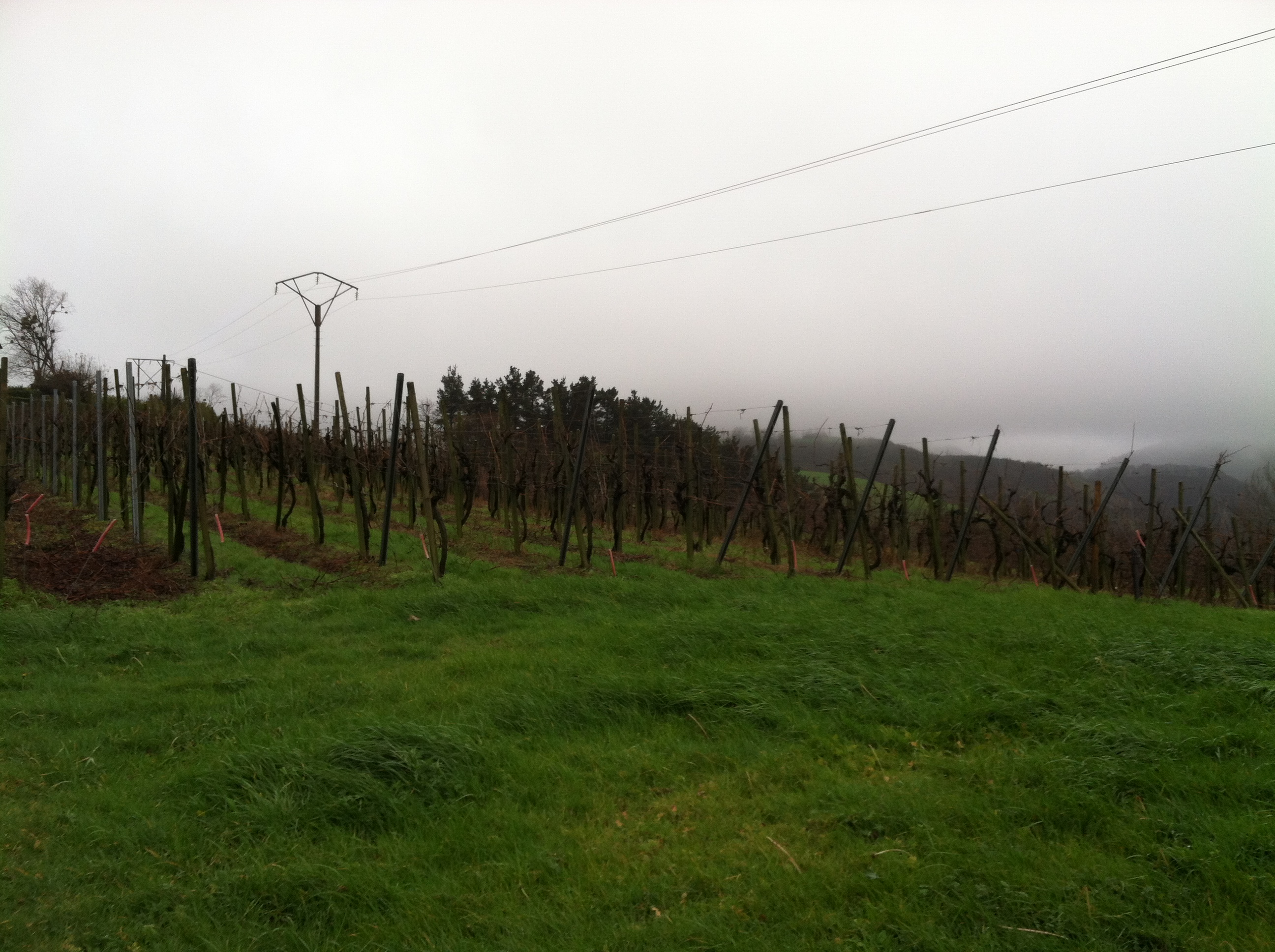
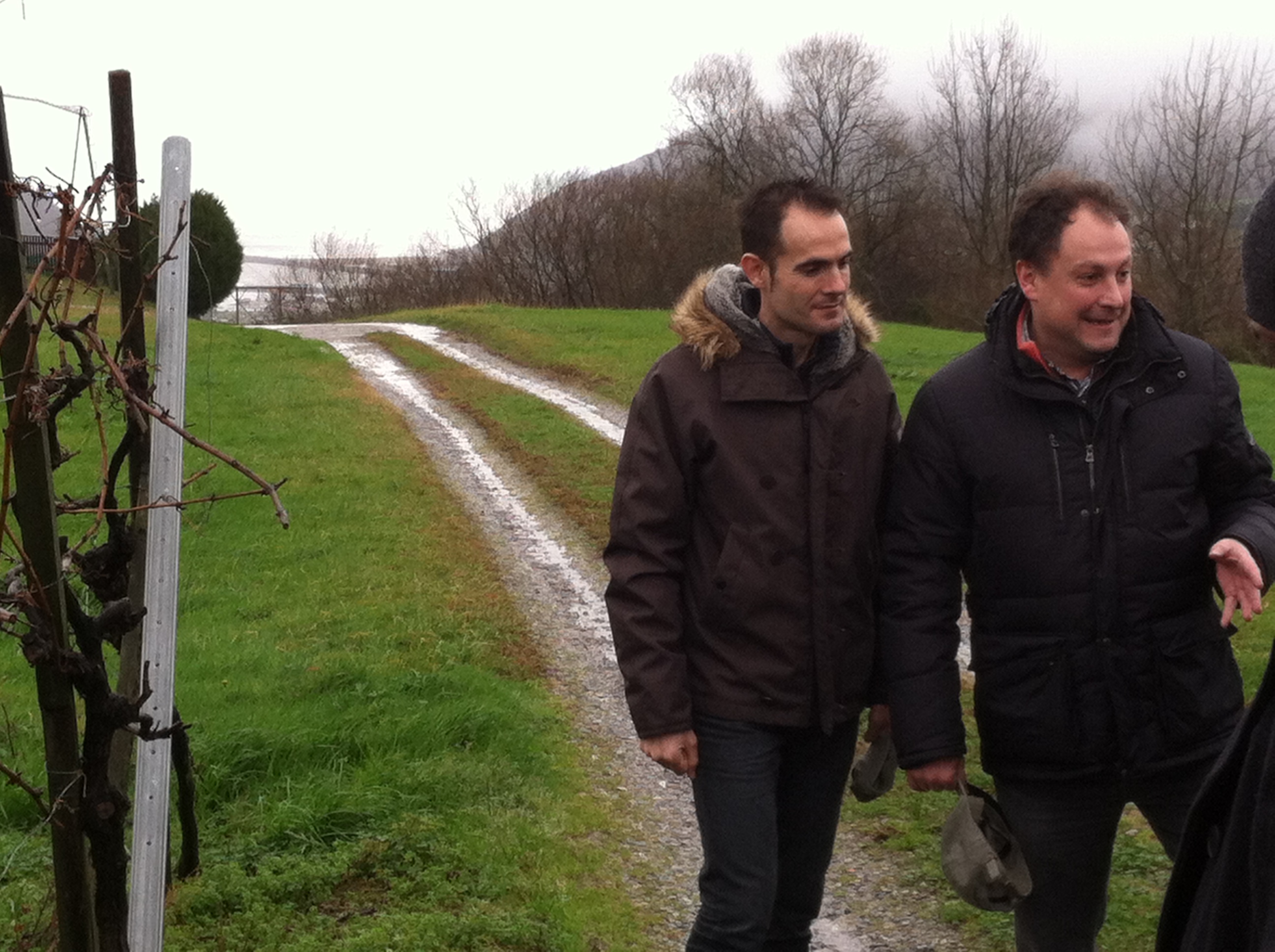
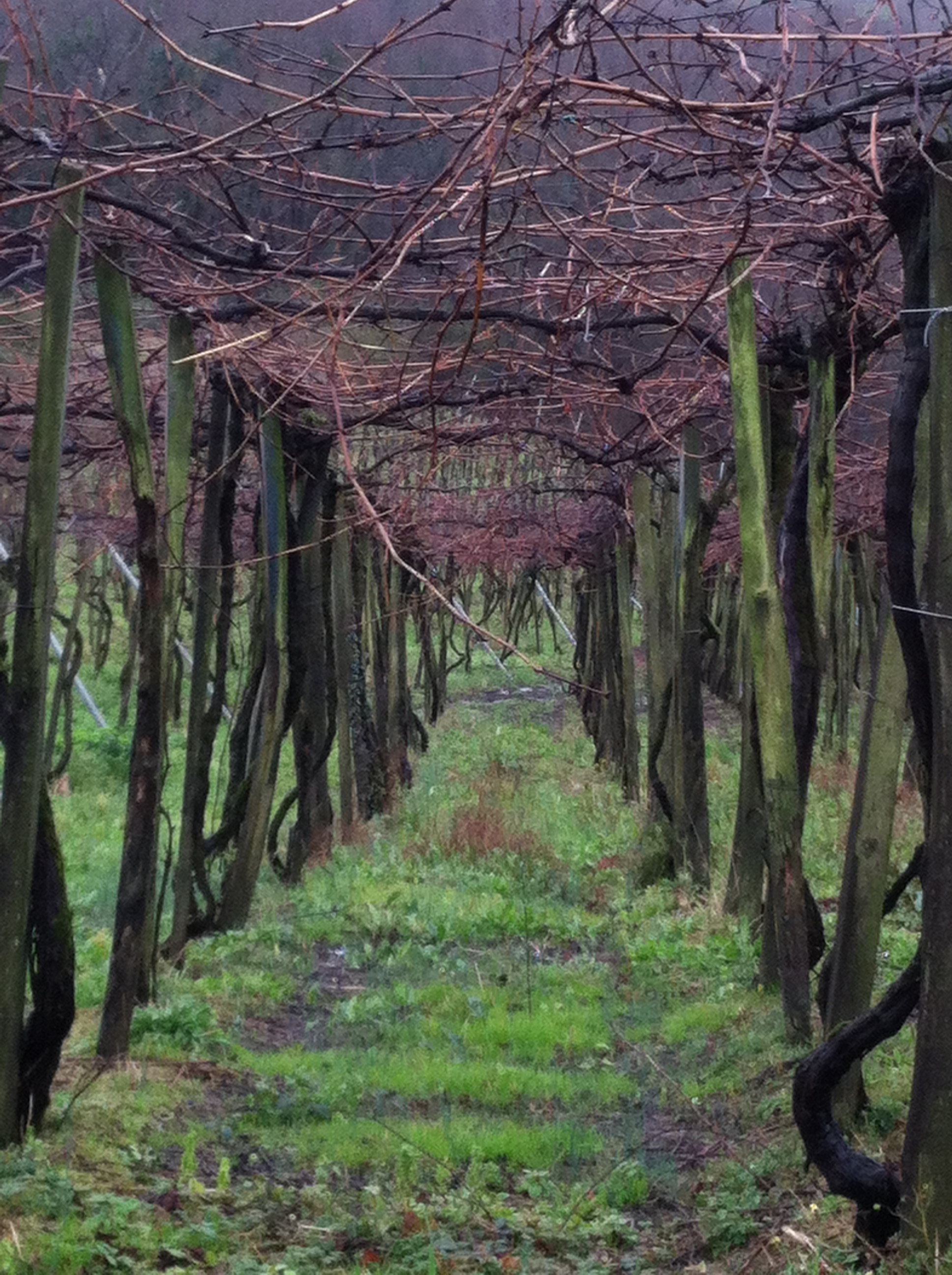
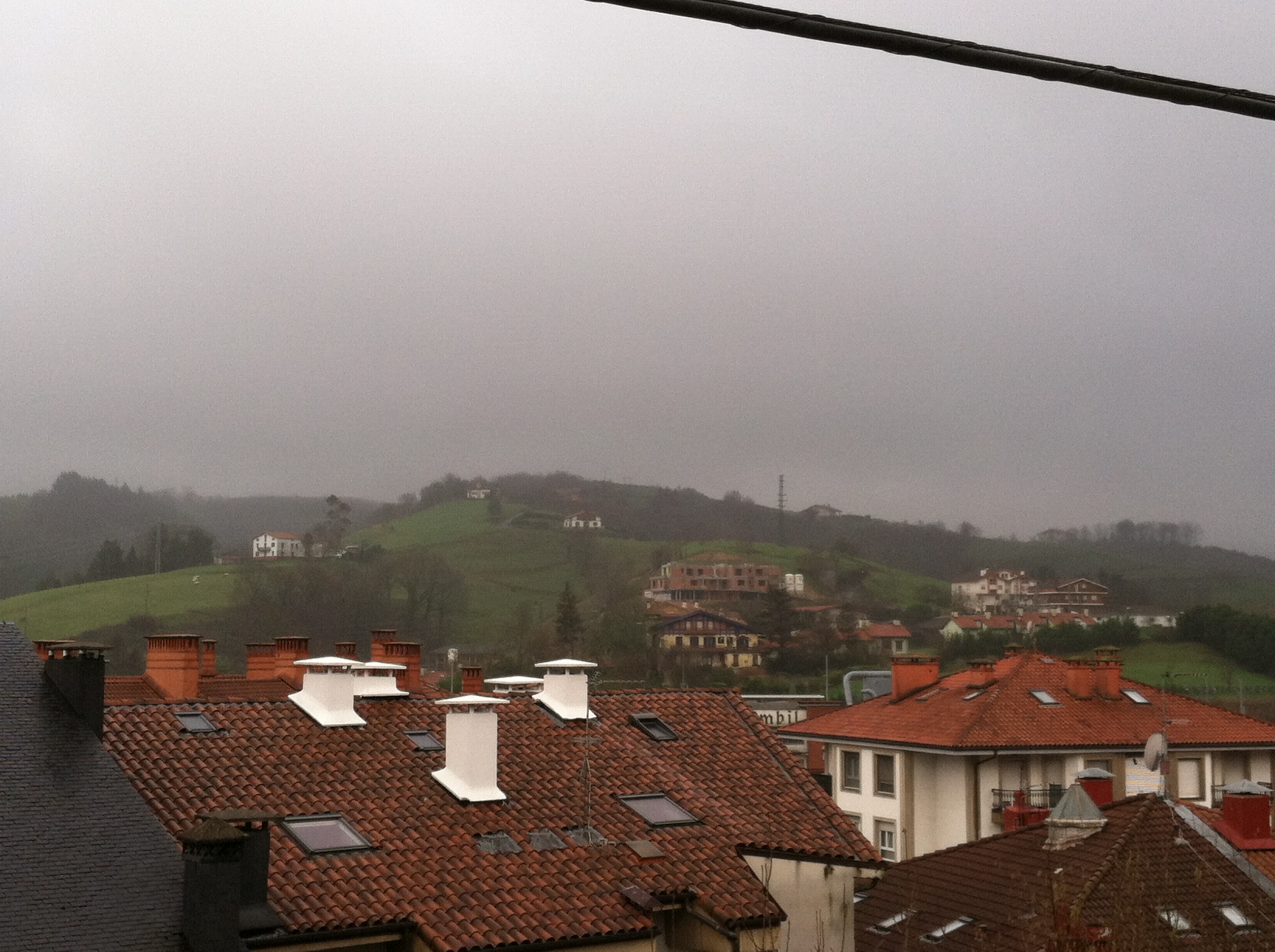
Pictures from my visit with Antxiola, January 2014…

IMG_0291 IMG_0296 IMG_0300 IMG_0301 IMG_0304 IMG_0314