Country Style Chicken (w/ wine pairings)

Country Style Chicken

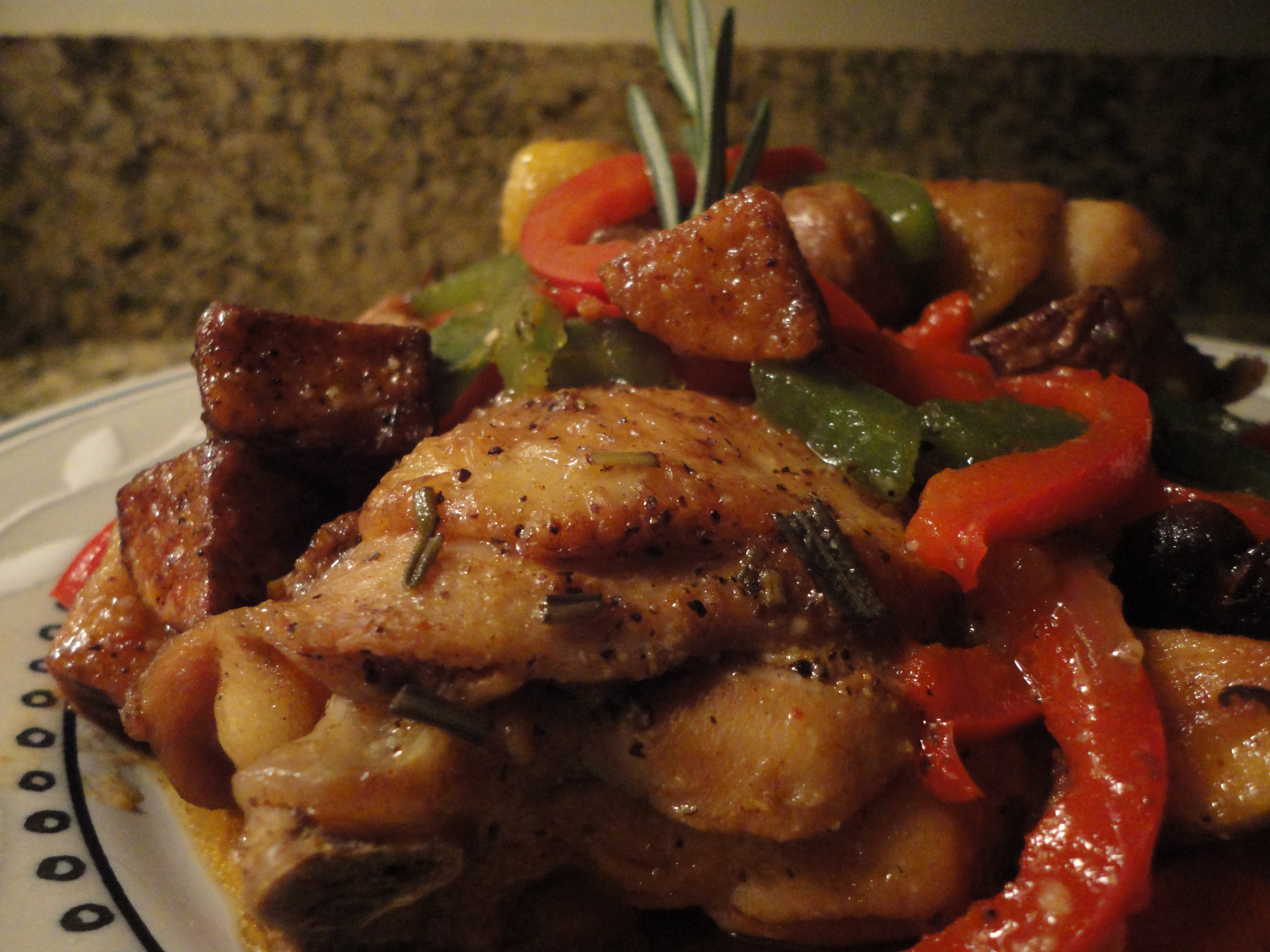
Way back when I worked at an Italian restaurant that was a mix between classic Italiano, hearty comfort food and haut cuisine, and one of our most popular dishes was Country Style Chicken. I never understood it. Why come to a restaurant where you can have some truly special, not easily replicated at home food made with exotic ingredients, and order chicken on the bone with sausage and peppers!? Then one day I finally had it, and wow… Sometimes good ‘ole hearty comfort food can really put haut cuisine on its ass!

After that mind altering experience I used to make the dish somewhat regularly… then I stopped. I guess I just got bored with it. Maybe too much of a good thing? I dunno. It’s probably been at least 7 years since I’ve made it. Anyway, the other day we had some chicken breast and sausage in the fridge and my wife said “why don’t you make that chicken country you used to do?”.

Great idea honey!

Then I botched it up… totally forgot the right way to make it. Don’t get me wrong, it wasn’t bad, it just wasn’t great. I knew I could do it better! So back to the store I went for more sausage and some chicken on the bone (forget that wimpy boneless breast stuff… who needs healthy!?), and it was on. Round two!

The second time around, I hit the darn ball out of the park.

So here’s my recipe for this good ‘ole hearty down home warm your soul rustic comfort food. Trust me, it’s easy, delicious, and you need to make this dish for your friends and family!

Serves 4-6

Ingredients (potatoes):
3c Potatoes, diced
1/2c All Purpose Flour
2tsp Salt
2tsp Ground Black Pepper
2tsp Garlic Powder
48oz Canola Oil (for frying)

Ingredients (chicken + everything else):
4lb Chicken on the bone
1lb Sausage, cut into chunks (hot or sweet depending on preference)
1 Large White Onion, sliced
2 Red Bell Pepper, julienne
1 Green Bell Pepper, julienne
8oz Mushrooms, sliced
4 Cloves Garlic, chopped
2tbsp Olive Oil
2tbsp Fresh Rosemary, chopped
2 1/2tsp Salt
2 1/2tsp Ground Black Pepper
1tsp Garlic Powder
1tsp Paprika
1/2c Chicken Stock
2tbsp Grated Parmesan

Heat your oven to 400F.

Pour the canola oil into a large, heavy bottomed, pot and bring to 350F.

Note: Chances are you don’t have a sauté pan that can accommodate FOUR POUNDS of chicken at one time so you’ll have to do it in batches, and I’m going to write the recipe as such. If you do have a sauté pan large enough… congrats, you get to cook all the chicken at one time. lol

Combine 1tsp each of salt, pepper, garlic powder and paprika, and evenly season your chicken. Heat 2tbsp of olive oil in a large sauté pan at medium high and add half of your chicken skin side down, cook until lightly browned then flip and repeat. Place the browned chicken in a 9×13″ baking dish, then repeat the prior step for the remainder of the chicken. Do not pour out the oil and drippings from the sauté pan when you transfer the chicken to the baking dish, you’ll need that! Using the same sauté pan, with oil/drippings, add the chunks of sausage and cook at medium high until lightly browned, then add them to the baking dish with the chicken. Once again, do not pour out the oil/drippings, you’ll need those to cook the vegetables. Turn off the stovetop and set the pan to the side for now. Add the chicken stock to the baking dish and sprinkle the chicken and sausage with the chopped rosemary. Cover the dish with foil then put it in the oven at 400F for 30 minutes.

In a large bowl combine the flour and seasoning from the potatoes section, then add your diced potatoes and coat thoroughly. You’ll want to fry the potatoes in two or three batches, depending on the size pot you’re using. There are a few reasons for the smaller batches, as compared to just dumping it all in at once… First and foremost if you put too much in at once it will reduce the temperature of the oil and leave you with a greasy end product. It also helps keep the potatoes from sticking together, and promotes more even cooking. Shake off any excess flour and carefully add the potatoes to the oil. Cook until golden brown, approximately 5-7 minutes, stirring periodically. After each batch is done frying use a slotted spoon to place the fried potatoes on a towel lined plate to allow any excess oil to drain. Keep at room temperature.

When the chicken and sausage has about 10 minutes left put the previously used sauté pan with all of its flavorful dripping glory back on medium high heat. Add the mushrooms and cook until browned, then add the onions, garlic and peppers, as well as 1/2tsp each of salt and pepper. Reduce the heat to medium low and cook until the chicken and sausage are done, stirring periodically.

Once the chicken and sausage have finished baking remove them from the oven and plate them up. Turn the heat off on the sautéing vegetables, add the fried potatoes and grated parmesan to the pan and toss well. Spoon the vegetables over the chicken and sausage, including some of the drippings… That’s it, you’re done! Hearty, super flavorful, rustic, comfort food deliciousness that will warm your heart, soul and stomach!

Now let’s talk wine pairings. When I think about rustic dishes like this my mind automatically turns to places like Piemonte, Rioja and the Rhone Valley… so that’s exactly where we’re going!

Hermanos de Peciña Crianza, Rioja, Spain – The Crianza is a blend of 95% Tempranillo, 3% Graciano and 2% Garnacha aged for two years in neutral American oak, and an additional two years in bottle. In the glass is a medium to full bodied wine of deep garnet hue. The bouquet reveals aromas of black cherry, cassis, fennel frond and subtle potpourri. On the palate are distinct notes of ripe cherry, blackberry and tart bramble fruit, as well as nuances of leather and nutmeg, with beautifully integrated acidity and soft tannins giving balance and backbone. Truly a beautiful wine and an unbelievable value. PP Score: 91 (Retail $18-22) For more information on Peciña and this particular wine see my article here.

Roagna Langhe Rosso, Piemonte, Italy – Roagna is a fourth generation winery with holdings in the communes of Barbaresco and Barolo. Their Langhe Rosso is 100% Nebbiolo from their younger vines found in the sites of Pira (Barolo) and Paje (Barbaresco), both considered Cru plots. Whereas most producers release their Langhe’s young, Roagna ages theirs as long or longer than their Barolo’s and Barbaresco’s… spending nearly 4 years in cask and an additional 1 year in bottle before release. In the glass is a medium to full bodied wine of light garnet hue with subtle rust tones along the edges. On the nose are aromas of dried cherry, anise, rose petal and sweet pipe tobacco. The palate mirrors the nose, with additional nuances of leather and cedar box, framed by subtle acidity and moderate, yet well integrated, tannins giving balance and backbone. An outstanding offering that in a blind tasting would easily be confused for a Barolo that retails at three times the cost. A tremendous value. PP Score: 94 (Retail $35-40) *Practicing Organic

Piaugier Côtes du Rhône Rouge La Grange, Rhone, France – Piaugier is a small producer primarily located in and around the village of Sablet (with additional small holdings in Gigondas) currently run by a husband and wife team that is extraordinarily humble and sweet. The Côtes du Rhône Rouge La Grange is their entry level offering made from a blend that is predominantly Grenache, as well as small amounts of Syrah, Cinsault and Carignan. In the glass you’ll find a medium bodied wine of ruby hue with purple edging. On the nose are aromas of cherry, cassis, dried herbs and cracked peppercorn. The palate opens with notes of dark cherry and tart bramble fruit with moderate acidic presence, transitioning into slightly spicy, earthy, herbal middle, finally leading into a lush finish of macerated fruit and pantry spice, rounded out by chewy tannins. A pleasant offering for the price point. PP Score: 88 (Retail $11-13) *Practicing Organic

Ok, so that’s it. My rustic chicken recipe and my recommended wine pairings. I hoped you enjoyed the read, and I certainly hope you’ll try the recipe and the wines! As always, new content is en route… In the meantime crack open a bottle of rustic esoteric red, sit back, and relax. Life if short, enjoy it.

Cheers!
Hummus Crusted Lemon Chicken

Hummus Crusted Chicken

Here’s a fun, easy and super flavorful dish I made the other day that I think you guys will like…

Serves 4

Ingredients:
4 Boneless Chicken Breasts
1tsp Salt
1tsp Ground Black Pepper
1/2c Hummus
1 1/2tsp Paprika
1/2c Dry White Wine
1/2c Chicken Stock
1/3c Lemon Juice
2tbsp Unsalted Butter
1/2c Cilantro, chopped

Heat your oven to 375F.

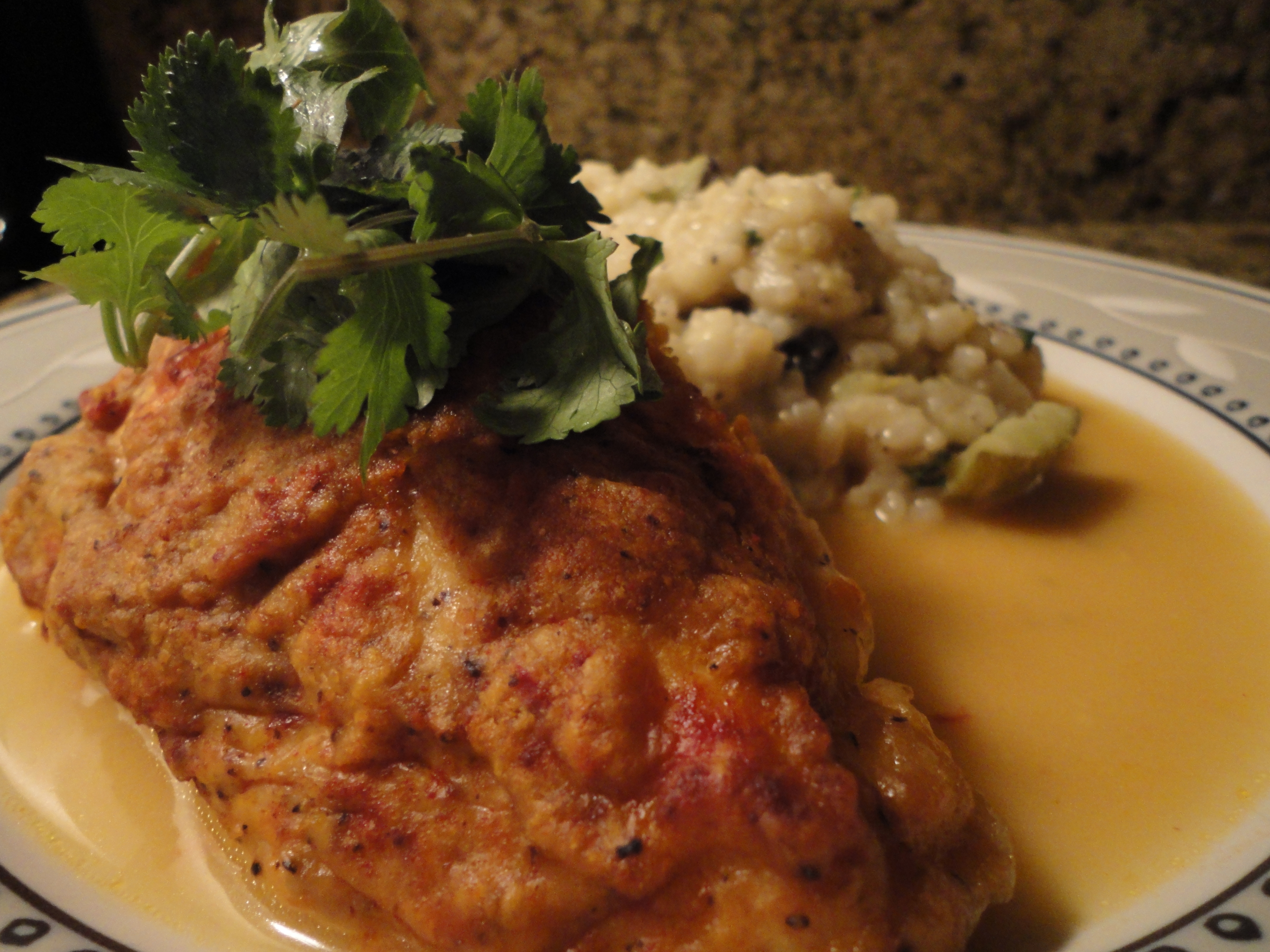
Wash off the boneless chicken breasts then pat them dry. Season them with salt and pepper, spread the hummus evenly over the top of the breasts, then sprinkle over the hummus liberally with the paprika. Put the wine, stock and lemon juice in a 9×13″ baking dish, then lay the breasts in the dish. Cover the dish with foil and place in the oven for 25 minutes at 375F. Remove the foil then cook uncovered for an additional 10 minutes. Remove the chicken from the baking dish and rest at room temperature, then carefully pour the liquid from the dish into a sauce pot. Add the unsalted butter and simmer on high for 3 minutes to thicken, season with salt and pepper as needed and desired. Pour the sauce onto your plates then place the chicken on top of the sauce. Garnish the chicken with chopped cilantro.

Serve with your favorite side and enjoy! Personally I did a zucchini & yellow curry risotto… it was delicious and a great pairing with the chicken.

As far as wine pairings I can’t get specific because I don’t know what side you’ll be doing, but I can say that I would typically recommend a medium to full bodied white with subtle acidity. I personally did a lightly oaked Bourgogne Blanc.

I hope you give the recipe a try and enjoy it… Cheers!

Wine Review – 2009 Hermanos de Pecina Crianza

Hermanos de Pecina Crianza 2009

Back in January of 2014 I had the pleasure and privilege to do some traveling through various wine regions of Spain, and I have to say that one of my favorite stops was visiting Bodegas Hermanos de Peciña in Rioja. I’m not sure why it’s taken me so long to finally feature one of their wines on the site, but I guess late is better than never.

For those not familiar, La Rioja is about 90 minutes south/southwest of San Sebastian in northern Spain. The appellation is one of the oldest, and most prestigious, growing regions in the world, with written history of winemaking dating back to the late 9th century. For generations of connoisseurs the wines of Rioja were the true essence of Spanish wine, steeped in long standing tradition of wines that were simultaneously rustic and elegant. Times have changed, however, and many wineries in the appellation have pulled away from Rioja’s past and are trying to pave a new way for the future. They have ceased making wines that portray rustic elegance and instead are producing wines that are ripe, lush, dark fruit driven and predominantly raised in new oak. In other words, they are producing wines that they hope can gain interest from consumers that typically lean towards Napa Cabernet, or as we say in the industry, wines that are “new world pandering”.

They are making wines with their wallets, rather than their hearts. They are looking for sales, rather than purity. It is truly depressing… Imagine how boring the wine world would be if everything tasted the same. If wineries stopped making wines that are varietally correct and indicative of their region. Wines with a sense of place. Wines that pay homage to the generations of winemakers that came before them.

This is where Hermanos de Peciña comes into the picture, and why they are so important.

Hermanos de Peciña was founded in 1992 by Pedro Peciña. For over 20 years Pedro was the lead agronomist at one of Rioja’s most storied houses, La Rioja Alta, but he wanted more, both for himself and his family. He wanted something that was his own, something that he could pass on to his children when the time came. So when the opportunity to purchase 50 hectares of vineyard in San Vicente presented itself he did not hesitate.

Not only did Pedro want a winery that bore his family name, he wanted to make wines that were representative of what Rioja had always been before the New World scourge had infected the market. Wines of rustic elegance. Wines with a sense of place. He wanted his winery to join the ranks of the traditionalists, which sadly can be counted on two hands, alongside iconic producers like Lopez de Heredia. He wanted to show the world what a true wine of Spain tastes like.

After the purchase in 1992 it took Pedro five years to get the vineyards (with vine ages upwards of 30 years at that point) to where he wanted them for his wines, and 1997 was the inaugural vintage of Hermanos de Peciña. More often than not it takes wineries a few vintages before they get into stride, but this was not the case with Peciña. Right from that first release they firmly established themselves as one of the top producers in the appellation. During my visit I had the honor of tasting through their entire 1997 lineup (Crianza, Reserva and Gran Reserva) and I was in absolute awe of the wines. Even the Crianza, a bottling that is traditionally meant to be consumed relatively young, was stunning.

Fast forward 12 years, to the 2009 vintage, and their Crianza is still exactly that… Stunning!

Now before I move forward, let me address a question that I’m sure is nagging at a number of you. No, I am not reviewing a library wine. Yes, 2009 is the current vintage of their Crianza. Not only is it current vintage, but it is newly so, having only hit the United States market within the past two months. But how can this be, most Crianzas available now are 2011 or 2012 vintage, and now some 2013’s are even starting to trickle in!? The explanation is simple… Peciña ages all of their wines well beyond designation requirements. To label a wine as “Crianza” it only needs to be aged one year in barrel and an additional six months in bottle before release. Peciña ages their Crianza two years in barrel and an additional two years in bottle before release. Technically they could label this wine as a “Reserva”. In fact, their Crianza ages even longer than is required for the Reserva designation, which is a minimum of three years total aging with at least one of those being in barrel. When I asked them they don’t label their Crianza as Reserva their simple response was “because we have a Reserva”… Oh yeah, and let me point out that their Reserva is aged long enough to be designated as a Gran Reserva! So what does that make their Gran Reserva? Amazing. That’s what it makes their Gran Reserva. Amazing.

Ok, so let’s talk about what’s in the glass…

The Crianza is a blend of 95% Tempranillo, 3% Graciano and 2% Garnacha (as are all of their red wines) aged for two years in neutral American oak, and an additional two years in bottle. In the glass is a medium to full bodied wine of deep garnet hue. The bouquet reveals aromas of black cherry, cassis, fennel frond and subtle potpourri. On the palate are distinct notes of ripe cherry, blackberry and tart bramble fruit, as well as nuances of leather and nutmeg, with beautifully integrated acidity and soft tannins giving balance and backbone. Truly a beautiful wine and an unbelievable value.

As far as food pairings go, I strongly recommend relatively simple fare… Stews, braised or roasted beef, lamb, goat or hearty vegetable preparations like lentils or roasted mushroom tarts.

With roughly 8,300 cases produced per vintage this wine has moderate market presence, though there are still some regions that haven’t yet been exposed to the brilliance that is Hermanos de Peciña. If that’s the case for where you’re at… well, that’s why we have internet and credit cards. There are plenty of online boutique retailers that will be more than happy to ship you a few bottles, or hell, buy a whole darn case! You’ll thank me later.

Score: 91
Retail: $18-22
Consumption: Now-2020

Pedro Pecina

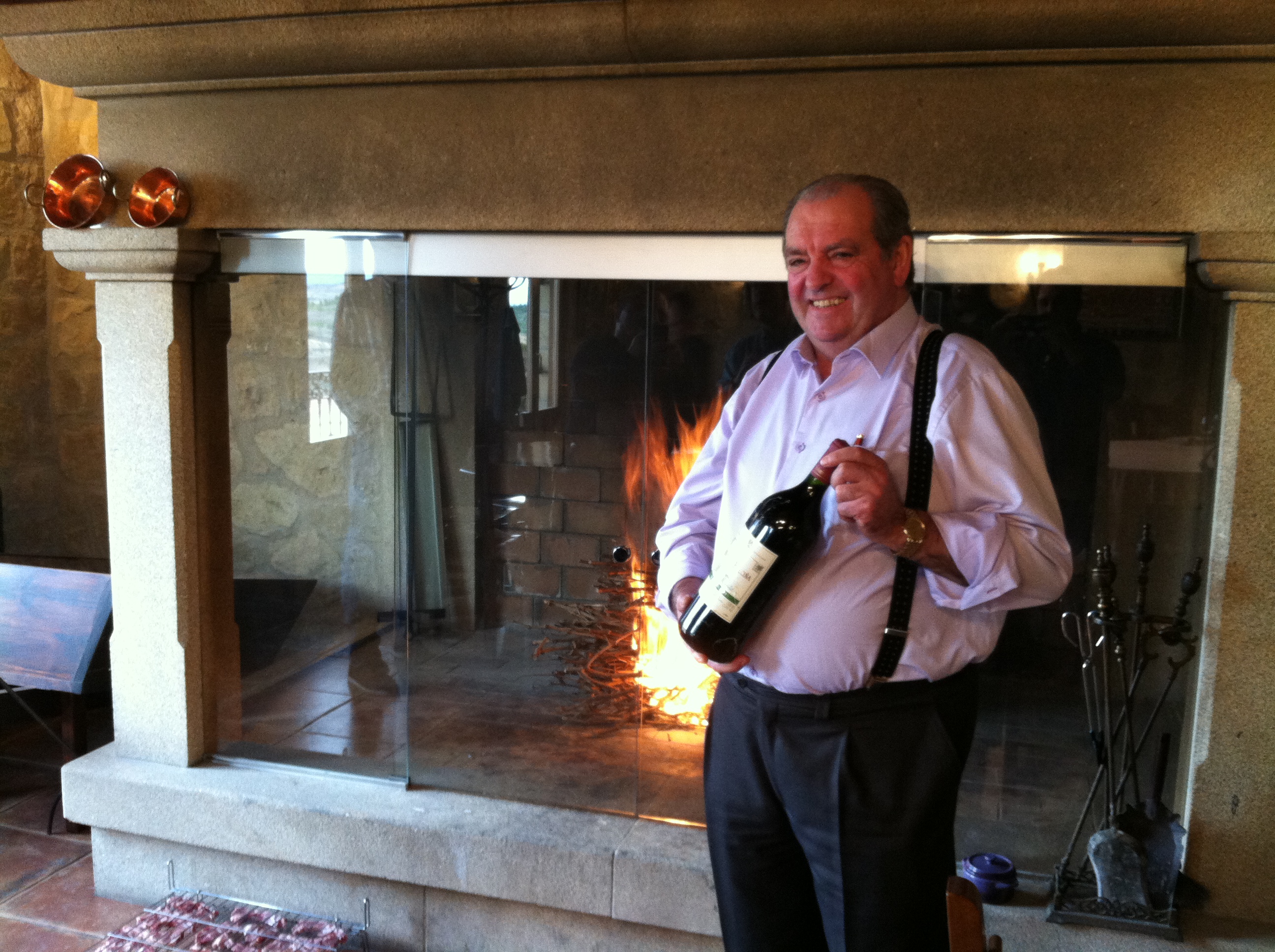
Pedro Peciña holding a magnum of 1997 Reserva, just before he cooks some
baby rack of lamb over that indoor bonfire of dried vine branches.

Escarole & Bean Soup with Sausage (w/ wine pairings)

Escarole & Bean Soup with Sausage

The other day a buddy of mine shot me a message asking me for wine recommendations to go with escarole & bean soup, and when he asked I thought to myself “wow, it’s been a long time since I’ve had escarole & bean soup!”. So the next day I was at the market and texted my wife asking what she would like to have for dinner. Her response was simply “soup”… Honestly, you can’t make this stuff up. So you can obviously guess what immediately popped into my head! Thanks for the inspiration Scott… lol.

So here’s my recipe for Escarole & Bean Soup with Sausage, I hope you enjoy.

Also, if you would like to serve it in a homemade bread bowl you can find that recipe in my Potato Chowder and Bread Bowl post.

Serves: 4-6 as an entrée, 8 or more as an appetizer/side.

Ingredients:
2tbsp Olive Oil
1 1/2lb Sweet Sausage Links, cut into small chunks
4 Cloves Garlic, chopped
1 White Onion, sliced
2c Dry White Wine
6c Chicken Broth (stock)
6c Water
1/3lb Chunk of Parmesan Cheese
3tsp Salt, (3) 1tsp portions
3tsp Ground Black Pepper, (3) 1tsp portions
38oz Canned Cannellini Beans
1 Bunch Escarole, chopped
4tbsp Unsalted Butter

Heat the olive oil in a large pot at medium high. Add the sausage and cook until lightly browned on all sides. Reduce the heat to medium and add the garlic and onion, as well as 1tsp each of salt and pepper, cook for 3 minutes, stirring periodically. Increase the heat to high and add the white wine, reduce by half. Once the wine is reduced add the chicken stock and water, bring to a boil then reduce the heat to medium low and add the chunk of parmesan as well as 1tsp each of salt and pepper. Cover and simmer for 30 minutes, stirring periodically. Add the butter, escarole, beans and the remaining salt and pepper, continue to simmer covered on medium low for an additional 20 minutes, stirring periodically.

Ladle it up and you’re ready to mangia!

Now let’s talk wine… So we’re looking for wines to pair with an uber traditional Italian soup, and in my opinion you simply HAVE to stay Italian with the wine. Listed below are my recommendations, including the wine that we had with the soup on day one, which is listed first, and what we had with the leftovers two days later, which is listed last.

Terra del Noce Barbera d’Asti Superiore, Piemonte, Italy – Terra del Noce is the entry level bottling of the Trinchero family, who has been producing wine in Asti since 1929. Barbera is the only varietal that they grow and it is their belief that the Barbera grape is grossly underrated, mainly considered a table wine, and they strive to show the world its potential of depth, elegance and complexity. In the glass you’ll find a medium bodied wine redolent with aromas of cherry, dark plum and tobacco. The palate matches the bouquet, with additional nuances of underripe strawberry, sage and black tea, all framed by moderate acidity and relatively firm tannins giving the wine balance and backbone. As always, the wine over delivers for the price. PP Score: 89 (Retail $13-16) *Practicing Organic

Cascina delle Rose Dolcetto d’Alba A Elizabeth, Piemonte, Italy – Cascina delle Rose have a meager three hectares of vineyard in the Rio Sordo Valley in Barbaresco. They have been producing wines since 1948, however, they’ve only been bottling wines under their own label since 1992. They are very highly regarded for their Barbarescos, but what most people don’t realize is that they also make very small quantities of Barbera and Dolcetto as well. Their Dolcetto is beautifully fresh and vibrant, with bright cherry notes, dried herbs, churned loam and subtle leather. The wine is stainless aged, allowing the fruit to shine and giving it great lift. The only problem is availability. With only 330 cases made per vintage there isn’t much to go around, but if you can find it the price is reasonable enough that you can stock up. PP Score: 90 (Retail $15-18) *Practicing Organic

Castell’in Villa Chianti Classico, Toscana, Italy – Castell’in Villa’s nearly 300 hectares of land (only 54 of which are under vine) are located in the prestigious hills of Castelnuovo Berardenga in the southern portion of the Chianti Classico DOCG. They are to Chianti Classico what Giacomo Conterno is to Barolo, Pingus is to Ribera del Duero, Petrus is to Bordeaux and Domaine de la Romanée-Conti is to Burgundy… the best of the best of the best. They were established in 1968 (first vintage was 1971) and their wines have proven to be the most classic, elegant, and age worthy bottlings ever to come from Chianti Classico. Their Chianti Classico is their basic offering, but there is nothing entry level about it. In the glass is a medium-to-full bodied wine of garnet hue with hints of rust along the edges. The bouquet is redolent with aromas of dried cherry, fresh mint, woodsmoke and damp earth. The palate predominantly mirrors the bouquet, along with additional hints of blackberry, cedar box, leather and crushed black pepper, with firm tannins giving grip and backbone that will soften over time, leading into a warm, lingering finish. Truly fit for royalty, which is apropos considering the owner is indeed a Princess. Approachable now, but this wine could easily stand another 10-20 years in the cellar. An absolute steal at this price. PP Score: 92+ (Retail $22-26)

So there you have it, my escarole soup recipe and my wine recommendations for pairings. Just let me know warn you now, if you make this soup and pair Ruffino with it we can no longer be friends, lol… Actually I’m not kidding. Anyway… As always there is new content in the works, but in the meantime sit back, relax, and crack open a bottle of small production Italian awesomeness. Life is short, enjoy it!

Buon Appetito!