Sriracha & Honey Shrimp (w/ wine pairings)

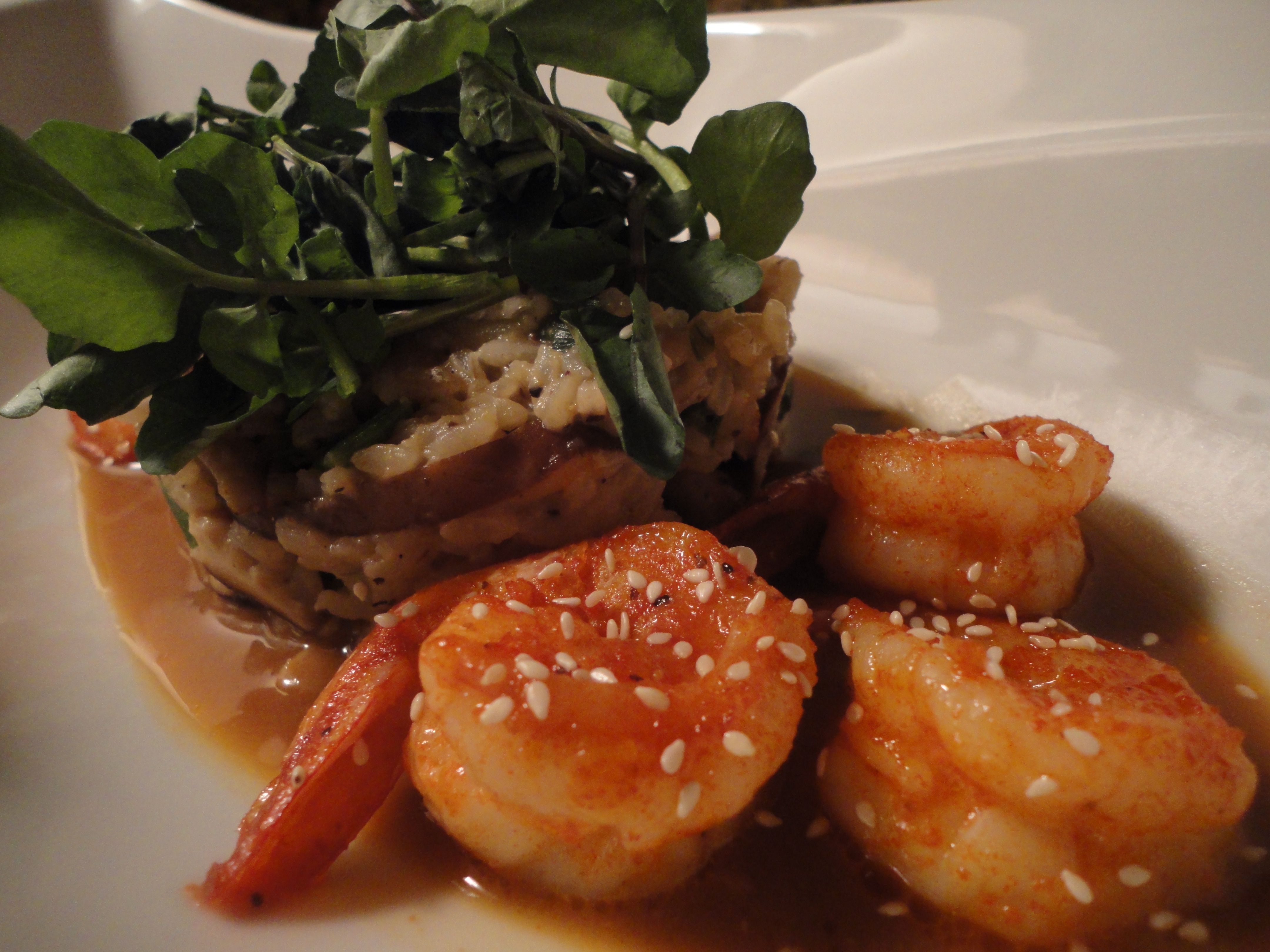
Sriracha & honey glazed shrimp, miso broth, shiitake & scallion rice. (recipe available)

Hi everyone, my name is Derek, and I’m addicted to Sriracha.

<in unison: “Hi Derek”> <everyone sadly nods and give each other knowing looks>

Yeah, so if there was a support group for Sriracha I think I would need to attend… then again, that would mean I was looking to quit Sriracha. Hmm, nobody likes a quitter right!? But it’s true, I think I have become addicted to the stuff, I put it on nearly everything now!

So the other day when I was trying to figure out what I wanted to cook for dinner I wasn’t trying to pair with  a particular wine, or had a certain protein in mind… I was trying to decide what I wanted with my Sriracha. This is what I came up with:

Sriracha & honey glazed shrimp accompanied by rice with fresh ginger, shiitake mushroom and scallion set in a red miso broth, garnished with fresh watercress and toasted sesame seeds.

Below is my recipe and recommended wine pairings. Enjoy!

Serves 4

Ingredients (shrimp):
1lb Raw Shrimp, peeled and deveined
1/4c Sriracha
3tbsp Olive Oil
3tbsp Honey
1tsp Ground Black Pepper
1tsp Onion Powder

Ingredients (rice):
1c White Rice
2c Water
1c Chicken Stock
1 1/2c Shiitake Mushrooms, sliced
1/2c Scallion, chopped
1tsp Salt, two 1/2tsp portions
1tsp Ground Black Pepper
1tsp Yellow Curry Powder
1tsp Fresh Ginger, peeled and grated
2tbsp Unsalted Butter

Ingredients (other):
2tbsp White Sesame Seeds, lightly toasted
1pkg Red Miso Broth Mix
1c Water
1c Chicken Stock
Fresh Watercress for garnish

Alright guys, this one is super easy to make, it’s fast,  and doesn’t create too many dishes to clean.

First thing you need to do is get the shrimp marinating, at least two hours before you plan on cooking dinner, and up to one day before. Combine all of the ingredients listed in the “shrimp” section, stir well to make sure that everything is evenly coated, then cover and refrigerate.

Once you’re ready to cook the first thing to do is get the rice going. In a medium pot melt your butter at medium-high heat, add the mushrooms and 1/2tsp of salt. Cook until the mushrooms start to lightly brown, then add the rice. Cook the rice and mushrooms for 3 minutes, stirring regularly, then add the ginger, chicken stock, water and seasoning. Bring to a boil then reduce heat to medium-low and cover, stirring periodically. The rice will likely take about 25 minutes to cook. Once you hit the 20 minute mark check the rice by tasting to get an idea of how far along it is and act accordingly. For the end product you want just a bit of firmness. Just before you’re ready to serve stir in the chopped scallion.

While the rice is cooking make the miso broth. Yeah, I know it’s cheating using something premade, but sometimes it’s just best to cheat. Bring the water and chicken stock to a boil, stir in the miso mix, then reduce the heat to medium-low and allow to simmer until ready to serve. You want it to reduce down a little but not too far, so watch the heat. If it reduces too much it could be overwhelmingly salty.

Last but not least is the shrimp. Do this when you have about 6 minutes left on the rice. Heat a sauté pan or pot on high then add the marinated shrimp along with all of the marinade that you had made prior. Sear for 2-3 minutes then flip and repeat. Once you’ve done that if the rice isn’t quite ready yet reduce your heat to low and stir periodically while you wait for the rice.

That’s it, you’re done. Easy wasn’t it? Go ahead and plate the broth, rice and shrimp, top with watercress and sprinkle the dish with toasted sesame seeds.

As far as wine pairings go I will almost always recommend white wines for 90% of Asian inspired dishes, and preferably something that has a touch of residual sugar and minerality to it to offset the heat and salt. Riesling, Gewurztraminer, Chenin Blanc, Albarino, Torrontes… these are go-to’s for me. You could also go with bubbly that has some dosage. Below are my three recommendations for this dish, including what we had that evening (listed first).

Domaine Huët Vouvray Demi-Sec Le Haut-Lieu , Loire, France – Domaine Huët is the most storied name in Vouvray. The winery was founded by Victor Huët in 1928 and immediately established itself as the standard bearer of the appellation. While a number of producers in recent years have made a go at Huët’s title, no one has been able to wrest it from them. They are simply the best (cue Tina Turner). Their Demi-Sec from the Haut-Lieu vineyards is almost life changing, yeah, that good. The wine is medium to full bodied, with subtle notes of citrus zest, white peach, honeysuckle and crushed granite framed with a perfect harmony of citrus acidity and honeyed sweetness. Only 1,500 cases are made per vintage but despite this fact there is pretty strong distribution of the wine throughout the US and you should be able to get your hands on a bottle. Or, as I would recommend, buy every one you can find! Another beauty of this wine is that it can be laid down for another 15-20 years, and it should only get better! (Retail $34-40)

Trapet Gewurztraminer Beblenheim, Alsace, France – Domaine Trapet was established in 1870 in Gevrey-Chambertin, and over the past century plus have proven themselves to be one of the top producers in this prestigious appellation. In 1993 the newest Trapet generation took over, under the guidance of Jean-Louis Trapet, and he seamlessly continued on with the family’s impeccable  reputation. While Jean-Louis’s family had holdings in Burgundy, his wife’s family owns vineyards in Alsace and he decided it would be interesting to produce some wines from their vineyards as a fun little side project. So here we have the Gewurztraminer from their holdings in the Beblenheim Vineyard. I would rate the wine as a demi-sec (semi-dry), while there is residual sugar there is still a nice balancing acidity. On the palate you’ll find notes of lychee, mango and meyer lemon, with very subtle minerality in the mid-palate and finish. This one will likely be difficult to find with only 400 cases made per vintage, but it’s worth the search! PP Score: 91 (Retail $18-22)

Bohigas Brut Reserva Cava, Catalunya, Spain – The Bohigas estate was established in the 13th century and the family has been producing wine from their lands since 1290! The current generation is a father daughter team, Jordi and Maria, and I have to say that they are two of the nicest people I’ve ever had the pleasure of meeting. Their wines are simply stunning, and unbelievably affordable. Their Cava Reserva can stand toe-to-toe with some Champagnes in my opinion, and a third of the cost. On the palate you’ll find notes of candied lime zest, green apple, crushed rock and white flowers, with palate awakening effervescence and a slight yeasty density. Even though the family has been producing wine for over 700 years, they were not imported into the United States until two years ago, so they’re still relatively unknown in our market (but that’s changing fast!). PP Score: 91 (Retail $13-16)

So there you have it, my recipe, my wine pairings, my admission to the world that I’m a Sriracha junky… I hope you enjoyed the read, and I hope that you make the dish and drink the wines. New content coming soon, but in the meantime crack open something crisp and subtly sweet, sit back, and relax. Life is short, enjoy it!!
Chicken Parm… sort of (w/ wine pairings)

DSC03499

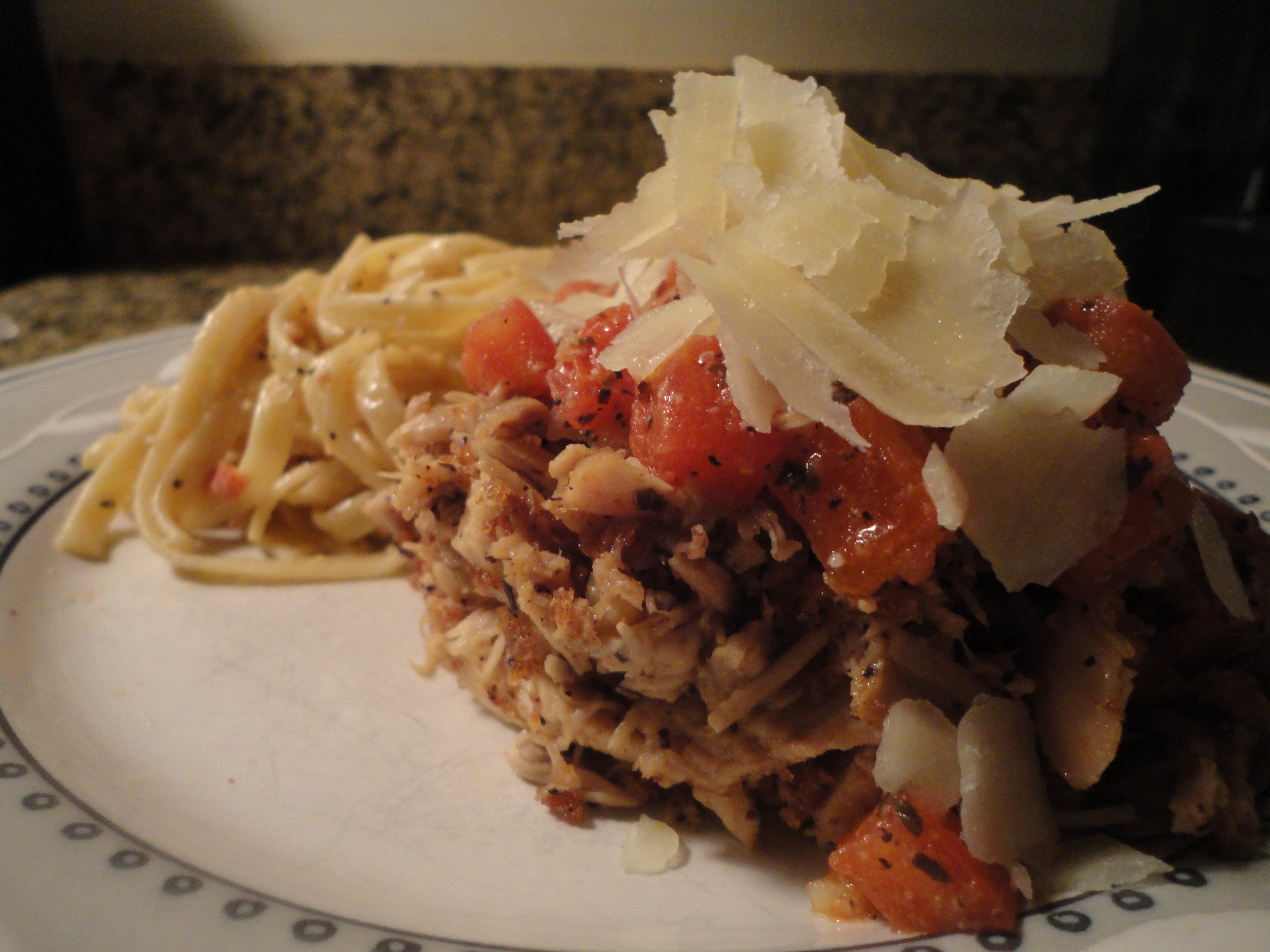
Every now and again I get requests from my readers for a twist on a traditional dish, like mac ‘n cheese, meatloaf, etc… Well the other day I was called upon by one of my Facebook followers to make chicken parmesan interesting for her finicky daughter. Chicken Parm!? How the heck do you make that more interesting? But I aim to please and try to fill as many requests as possible, so I sat down and gave it some serious thought… which net me a whole lotta nothin’. Instead my mind started to wander, and I suddenly had a craving for shredded pork. Mmmm, shredded pork… Hold on a sec. Maybe shredded chicken? Eureka! I got it, why not a deconstructed chicken parmesan? Shredded chicken tossed with the toasted panko that you would normally crust the cutlet with, and top it with a warm tomato salsa instead of sauce, and some shaved cheese. And instead of dry white meat why not use thighs for a more tender end product? Perfect!

On the side I served a little pasta in a tomato garlic cream sauce.

Serves 4

Ingredients (chicken):
3lbs Chicken Thighs (I used bone-in/skin-on thighs for more flavor)
3tbsp Unsalted Butter
1/4c Chicken Stock + 1/4 Chicken Stock
1tsp Salt + 1/2tsp Salt
1tsp Ground Black Pepper + 1/2tsp Black Pepper
1tsp Dried Basil + 1/2tsp Dried Basil
1tsp Garlic Powder + 1/2tsp Garlic Powder
1c Panko, unseasoned
1/4c Grated Parmesan Cheese
2tbsp Olive Oil

Ingredients (salsa & cheese):
2c Plum Tomato, diced
2 Garlic Cloves, chopped
2tbsp Olive Oil
1/2tsp Salt
1/2tsp Ground Black Pepper
1/2tsp Dried Basil
1/2tsp Dried Oregano
3/4c Shaved Parmesan

Ingredients (pasta):
1lb Pasta (I used fettuccine)
1 1/2c Plum Tomato, diced
2 Garlic Cloves, chopped
1tbsp Olive Oil
1/2c Chicken Stock
1c Heavy Cream
1/2tsp Salt
1/2tsp Ground Black Pepper
1/2c Grated Parmesan

Heat oven to 375F

I know it seems like there is a lot going on in this dish, but trust me when I say it’s super easy to make. I will warn you though, it makes a LOT of dirty dishes… lol.

The first thing to get started on is the chicken. Like I mentioned above, I prefer to use thighs with bones and skin because I feel they have more flavor, and are more tender, when cooked, but if you want you can go with boneless/skinless thighs. Put the chicken in a baking pan, add a 1/4c of chicken stock and the butter, then sprinkle with 1tsp each of salt, pepper, garlic powder and dried basil. Cover with foil and cook in the oven for 45 minutes.

While the chicken is cooking you can prep your salsa. In a bowl combine the diced plum tomato, garlic, olive oil, salt, pepper, basil and oregano. Cover and set aside at room temperature.

You can also get the panko ready. Get a sauté pan hot and add your panko, stirring regularly as it will brown quickly. Once browned remove it from heat and toss in 1/2tsp each of salt, pepper, dried basil and garlic powder, as well as the 1/4c of grated parmesan. Set aside.

After 45 minutes remove the chicken from the oven, uncover and allow to rest for about 15 minutes so it is cool enough to handle with your hands.

While the chicken is cooling get the pasta working. Boil your pasta in salted water for two minutes less than directed on the packaging. While it’s boiling get a sauté pan or medium pot and heat your olive oil at medium-high. Add your garlic and lightly brown, then add the diced plum tomato, salt and pepper. Cook the tomatoes for about a minute then add the heavy cream and chicken stock. Bring to a boil then reduce the heat to low and allow to simmer. Once the pasta is cooked drain it and add to the sauce, along with the grated parmesan cheese. Stir well and continue to simmer at low heat until ready to serve. This allows the pasta to finish cooking in the sauce itself, which creates better flavor.

By this point the chicken should most definitely be cooled enough to comfortably handle. Remove the skin. Using the tip of a fork shred the meat off of the bone, break apart any larger pieces. The chicken may still have a touch of pink to it as you get close to the bone but that’s ok because you’re going to finish cooking it through.

Heat the olive oil in a sauté pan or sauce pot at medium, add your shredded chicken and 1/4c of chicken stock, cook for three minutes, stirring periodically. Add the panko/seasoning mixture and stir well to evenly coat the chicken, cook for an additional three minutes.

While the shredded chicken is cooking you can do the final step, which is warm up the tomato salsa. Heat a sauté pan or sauce pot on medium, don’t add any butter or olive oil as the prepped salsa already has oil. Simply add the salsa to the hot pan and cook for two to three minutes, stirring periodically. You don’t want to cook the tomatoes to the point that they’re mushy, you just want them brought up to temp.

Everything is cooked, now you’re ready to bring it all together. Plate the chicken, then top it with the warmed tomato salsa and shaved parmesan, and plate the pasta in sauce along side. Viola, you’re done! Congrats, you just took a boring dish and made it new and exciting.

As far as wine pairings go the options are endless. Being that we’re talking chicken parmesan I would recommend an Italian wine, but there are such a variety that pair well with the flavor profiles in the dish. Here are my recommendations, along with what I had that evening (listed first)…

Elio Perrone Barbera d’Asti “Tasmorcan”, Piemonte, Italy – For decades Elio Perrone has been heralded as one of the top Moscato producers in Asti, but it wasn’t until the late 1990’s when Elio’s son Stefano took over the winemaking reigns that the winery began producing Barbera. Stefano purchased two plots of old vine Barbera, one forty years old the other seventy, with the goal to produce fresh bright Barbera that the Asti region is known for, but with just a bit more depth of character. On the palate you’ll find notes of tart cherry, dark berry, wood smoke, licorise and hints of fresh wildflowers, balanced with moderate acidity and subtle fine tannins. The wine is ready to drink to now but could certainly be laid down for three to five years. You’ll have a difficult time finding a better Piemonte wine at this price point… PP Score: 90 (Retail $15-18)

Fattoria di Fubbiano Colline Lucchesi Rosso, Toscana, Italy – Fubbiano is located in the rolling hills overlooking the town of San Gennaro in northern Toscana. Their 45 hectare estate, 20ha of which is vineyard (the other 25ha is olive orchards and rolling fields), was established in 1392, and their winery built in the late 17th century. Needless to say that have a pretty good idea of what they’re doing when it comes to wine and olive oil! The Colline Lucchesi Rosso is their entry level red, made from a blend of Sangiovese, Canaiolo and Ciliegiolo (yeah, go ahead and pronounce that one). For a wine at this price point it’s surprisingly complex, with notes of dark cherry, raspberry, crushed violet and the slightest nuance of game, framed by subtle acidity in the opening, and chewy tannins and slight heat in the finish. The only problem is that Fubbiano’s distribution in the US is sparse, mainly just California and New York, with a handful of stores carrying them in New Jersey as well, so you may need to grab this one online. PP Score: 88 (Retail $17-20)

Podere la Berta Sangiovese di Romagna, Emilia-Romagna, Italy – The La Berta estate was recently purchased by the Poggiali family of Felsina and Castello di Farnetella fame in Tuscany. The family’s roots originate in Romagna, and they’ve always wanted to have a winery there, but they specifically wanted to focus on Sangiovese, which is not the predominant red varietal of the region. But when La Berta was put up for sale, a winery that specialized in Sangiovese di Romagna as well as the white varietal Albana, it was a no brainer for the Poggialis. The wine is really an absolute steal at the price point. There are distinct notes of cherry, ripe raspberry and fennel, with very subtle tannins giving the wine a touch of backbone. It is aged entirely in stainless with allows the fruit to really shine and gives the wine a wonderful brightness. This wine is one of the few Sangiovese that can be drank without needing food, but it makes for a great food wine as well. PP Score: 89 (Retail $12-15)

So that’s my recipe and my pairings. I’d like to think that I successfully breathed new life into a tired old dish found in every “pizzeria ristorante” across the country. As always there is new content on the way. In the meantime crack open an inexpensive Italian gem (that isn’t Ruffino!), sit back and relax. Life is short, enjoy it!

Molasses Rye Bread

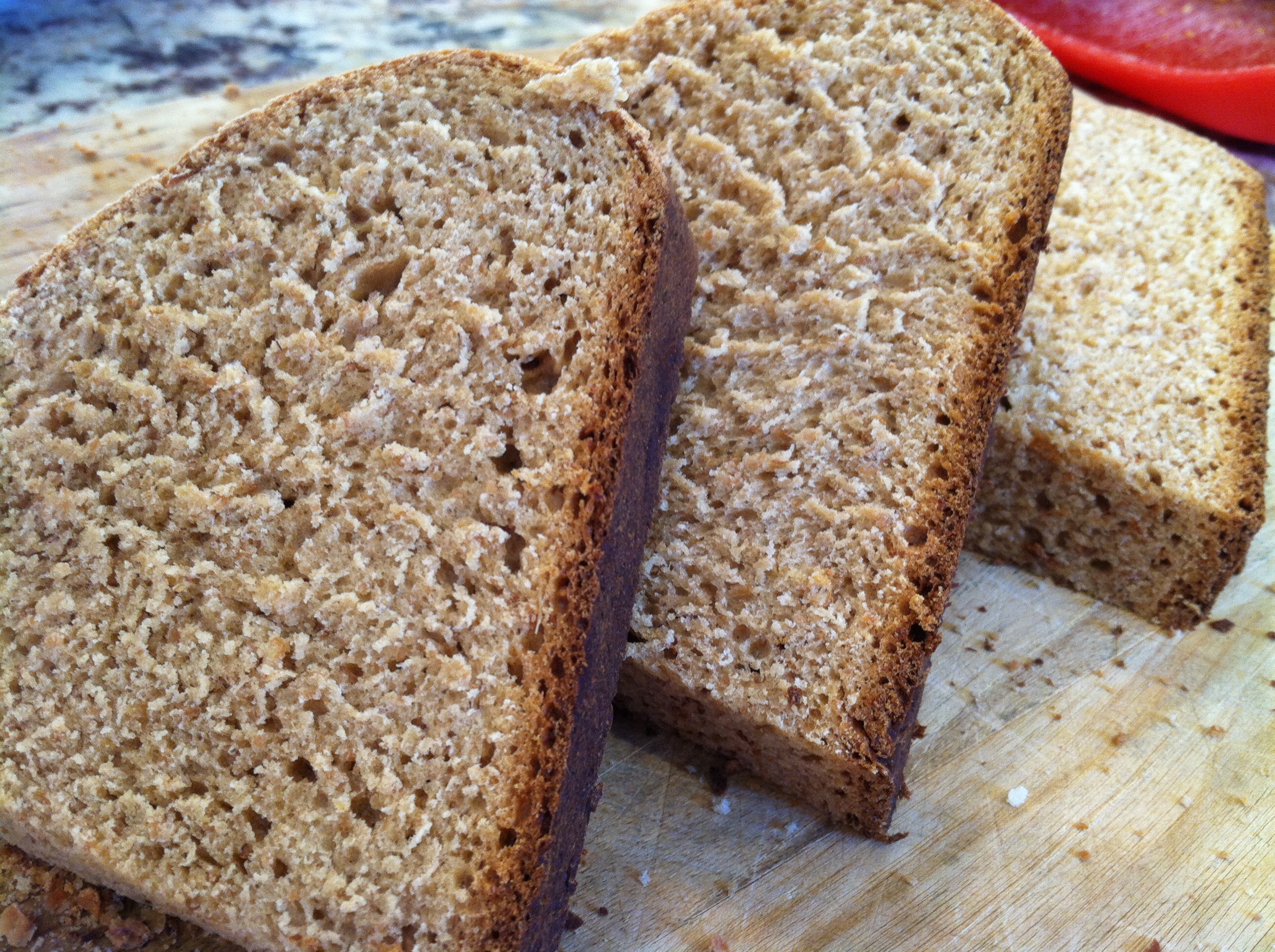
Molasses Rye

My beloved mother-in-law requested that I bake some rye bread for Easter dinner so I decided to play around a little bit and get more creative than my typical recipe. So here is my newly created molasses rye… Really easy to make and absolutely delicious! And don’t worry, it’s not an overly sweet bread even though it has molasses and brown sugar.

Ingredients:
1 envelope Active Dry Yeast
1c Warm Water (between 102-110F)
1tsp Granulated Sugar

3tbsp Unsalted Butter, melted
1/3c Brown Sugar
1tsp Salt
2tbsp Molasses
1c Rye Flour
2c All Purpose Flour

1/2c All Purpose Flour, for kneading
1tsp Olive Oil, to grease bowl

Heat oven to 350F

One quick note before we get into the directions… I use my stovetop for yeast activation and to get the bread to rise. When it’s heated at 350F the top gets warm, but not hot, and is an ideal setting for yeast to do it’s thing. That might not be the case for you. Maybe your stovetop gets too hot when the oven is on, maybe it doesn’t get hot at all. Ultimately you want a warm, draft free place to activate your yeast and also get your bread to rise.

Combine the warm water, dry yeast and 1/4tsp of sugar. The yeast will activate and expand, turning the water creamy and creating a bloom on the surface. Most recipes say to give it 5 minutes, I typically allow my yeast to activate for at least 15 minutes. I’m not sure if it makes a ton of difference, but I feel like the dough rises better and has more intense flavor… maybe that’s just my imagination.

In a stand mixer cream the melted butter, brown sugar and salt. Once it gets to a light brown color add the molasses and continue to mix for another minute or so. Add the rye and all purpose flours, as well as 3/4c of the yeast/water mixture and mix on medium-low speed until the flour starts to combine with the fluids. Slowly add the remaining 1/4c of water, then increase the speed to medium. Mix for 3-4 minutes. The dough should be tacky to the touch.

Spread 1/2c of all purpose flour onto a cool surface and turn your dough out onto it. Knead the dough, gradually incorporating the flour, until it is slightly elastic, approximately 5-7 minutes. Coat a medium bowl with the olive oil and put the dough into the bowl. Cover with a dry towel and set in a warm place to rise, approximately 1 hour. Once the dough has nearly doubled in size turn it back out onto your floured surface and knead for another 2-3 minutes, then place back in the bowl, cover, and allow to rise a second time, approximately 20 minutes. Remove the dough from the bowl and lightly punch it down with your finger tips to release some of the air, but not all. Place on a baking sheet lined with wax or parchment paper,  or if you prefer a loaf use a greased loaf pan. Make a shallow slit along the top, then place in the oven and bake for 50 minutes at 350F. Allow the bread to cool for at least 15 minutes before cutting.

Enjoy!

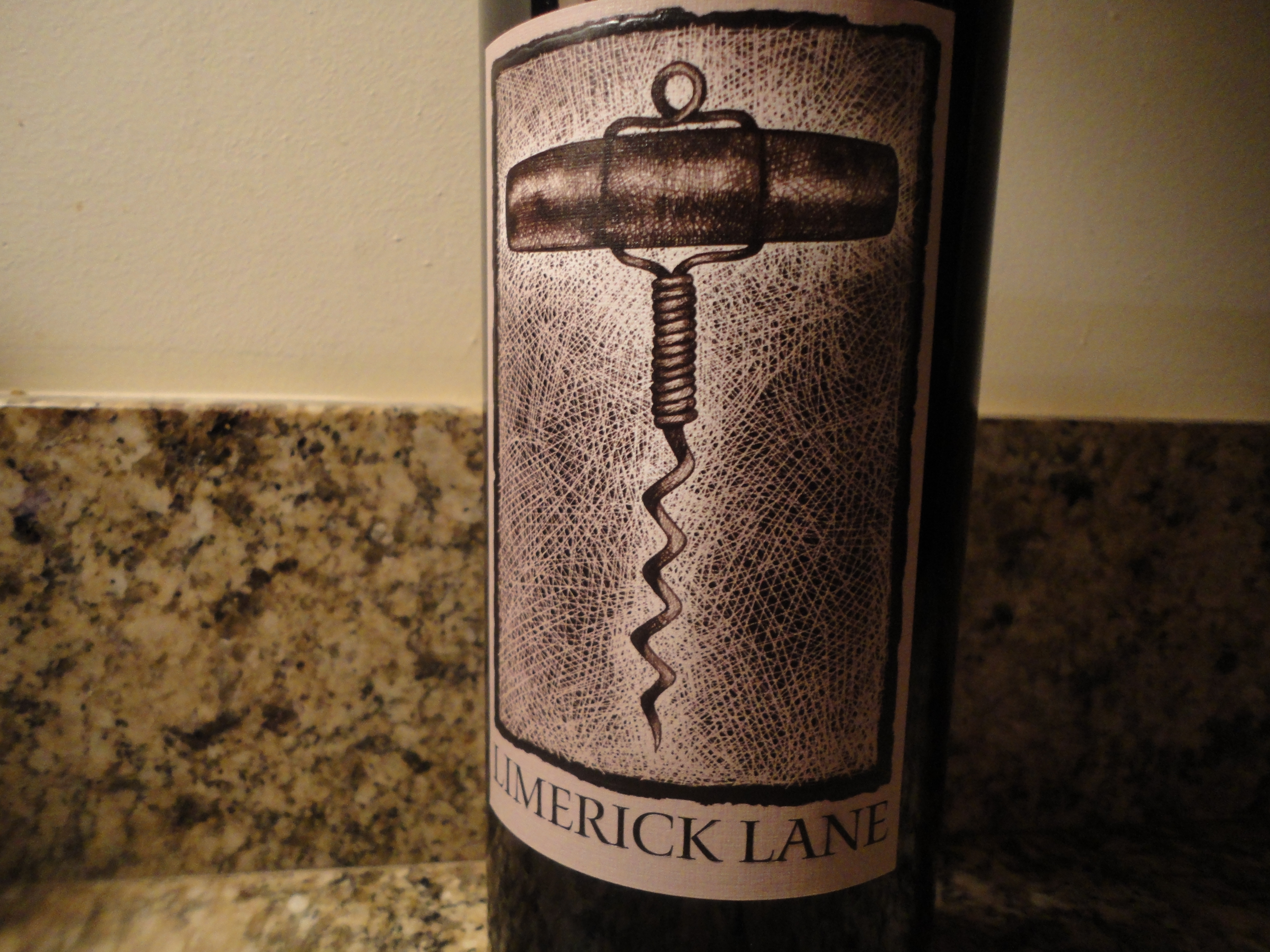
Limerick Lane from Russian River

DSC03429

The exact origin of the limerick is uncertain, as is the reasoning for calling these quirky (and usually dirty *cough* There once was a man from Nantucket *cough*) poems “limericks”… but it is widely believed that they are named after prose parlour games that were said to be popular in the city of Limerick, Ireland back in the mid-1800’s. With that in mind, you would think that a vineyard bearing the mark of the Irish would also enjoy the luck of the Irish, but that was certainly not the case with Limerick Lane for the first 30 years of its existence.

The story behind Limerick Lane began in the late 1970’s, when brothers Tom and Michael Collins, as well as their close friend Ted Markoczy, purchased the old 30 acre Del Fava family vineyard located just south of Healdsburg (in the Russian River AVA) in two separate parcels: 10 acres in 1977, then the remaining 20 in 1978. At that time the vineyards were in a state of gross disrepair, and with the exception of a small plot of Zinfandel planted in 1910, had to be ripped up and replanted. The rebirth of this estate didn’t immediately become Limerick Lane, instead it was the dubbed the Collins Vineyard where they were winegrowers, not winemakers. Collins Vineyard quickly become one of the most desirable sites in Sonoma for sourcing Zinfandel, and they sold to some of the top names of the time, including De Loach, Chateau Souverain, Ravenswood, Davis Bynum and Gary Farrell. It wasn’t until 1986 that the Collins brothers decided to give it a go themselves, and Limerick Lane was born.

All was well at LL in the beginning, and they established themselves as one of the top Zinfandel producers in the region… then tragedy struck in both 1992 and 1993. Not only did Michael lose his close friend Ted Markoczy (who was part owner of a portion of the estate), but also his brother Tom, who was the winemaker for Limerick Lane. As I said, unfortunately the luck of the Irish was not smiling down upon the Collins. Despite suffering such great loss in such a short time, Michael pushed forth with the vineyards, though the drive behind Limerick Lane subsided and the focus of the estate once again became growing wine. That is not to say that Michael entirely stopped making wine under the label that he and his brother had started, but it was Tom that had the true passion for the making of wine, and when he passed, so did his inspiration.

Fast forward to 2009…

Michael Collins decided it was time to call it quits, but the last thing he wanted was to simply sell his estate, his and his brother’s estate, to the highest bidder. He wanted his hard work, and the memory of Tom, to go to someone who would love the land, love the grapes, and continue the legacy they had started back in 1978. This led him to Jake Bilbro, son of Chris Bilbro, the owner of Marietta Cellars. Jake immediately saw the opportunity of what he was being offered, and desperately wanted to make the purchase, but there was just one problem… a problem that many of us face when we have a dream within our grasp.

Money.

Two years…

Two years is how long it took for Jake to finally get the funding he needed to purchase Limerick Lane and Collins Vineyard from Michael Collins. For two years Michael continued on, waiting for Jake to find the money. In the end it was a small local bank in Healdsburg, the town where the estate is located, that came through with the funds.

Maybe the luck of the Irish was finally smiling down on Limerick Lane.

So in 2011 Jake Bilbro finalized the purchase of this storied estate, and literally began harvest the day after closing.

Who did Jake hire as his winemaker?

His brother, Scot…

How fitting, how unbelievably appropriate, is it that there is once again a team of brothers producing wine under the name Limerick Lane? It’s as if it was meant to be. As if Michael Collins knew, deep in his soul, that Jake Bilbro and Scot Bilbro were the ones who were meant to carry on his and Tom’s legacy, and waited for them to be ready. The ones that would finish what the Collins brothers started.

And boy, oh, boy… have they taken the reigns and started with a bang. Maybe it’s the luck of the Irish, maybe it’s Tom Collins, but somebody is most definitely smiling down on the Bilbro brothers.

In their inaugural vintage as owners, the Bilbros produced a bit more than a handful of wines. Six of those have recently received scores from Robert Parker ranging from 91-95 points. He went on to say the following…

“The Healdsburg winery on Limerick Lane broke into the wine scene many years ago, only to go through a succession of tragic events which need no further elaboration. In any event, the winery basically stopped producing wine, but recently this 30-acre estate was taken over by the family that owns the Marietta Winery in Alexander Valley, and I believe these are the first releases from Limerick Lane in many years. What is so remarkable is not only the quality of the following wines, but also that they emerged from 2011, a vintage notoriously poor for Zinfandel. You would never know that when tasting these wines. This winery looks set for a terrific resurrection.

And it’s not just good ‘ole Bob that is expressing joy over the rebirth of this storied estate…

“Limerick Lane’s estate vineyard is one of the great, historic old-vine vineyards of the Russian River Valley.  With it’s well-drained, rocky soils and expertly tended vines, it produces wines of exceptional harmony and balance.  I have admired this vineyard for decades and am thrilled to see it under the new stewardship of Jake Bilbro.”
-Mike Officer, Carlisle Winery

“I am fortunate to get to spend my days working with some of Napa’s premier vineyards such as Araujo, Spottswoode, Stags Leap Wine Cellars, and Hall.  I can very comfortably say that the Limerick Lane estate is one of the most unique and intriguing sites I have seen in a long time.  This estate unquestionably has the potential to produce some of the world’s very best Zinfandel…”
-Steve Mathiasson, Premiere Viticulture

As of yet I’ve only had the pleasure, and pleasure is a gross understatement, of quaffing one of these Bilbro gems, their 2011 RRV Zinfadel. I have to admit, when I first saw that the wine was weighing in at 15.1%, I was moderately skeptical of how much I was going to enjoy the experience… Oh my God! Seriously, this wine is astounding. My palate was transformed into Davis Symphony Hall and the wine was the San Francisco Symphony. There was so much going on, it was so complex, but at the same time so harmonious. Up front is a beautiful blend of dark berry, tart cherry and ripe raspberry, then leading into the mid palate you get this completely out of left field zing of bracing acidity with undertones of churned loam and anise, finally leading into a finish redolent with freshly crushed pink peppercorn and hints of clove, accompanied by subtle tannins, oak and the slightest heat. It is crazy that a wine sporting a 15.1% ABV could be so seamless and only show the most subtle hints of heat only in the finish.

This is a wine that you should allow to breathe for at least 30 minutes before serving, preferably longer.

As far as food pairings, the combination of dark fruit, depth and acidity make it absolutely ideal for heavily marbled meats. The dark masculinity can stand up to the sheer power of the meat, but the bracing acidity will help cut through the fatty richness. Personally I paired it again a heavily marbled ribeye… it was perfect.

I hope to soon taste through the remainder of the lineup… but as far as this wine goes, I am thoroughly impressed. Robert Parker gave it a 91… tsk tsk tsk Bob. That is FAR too conservative. In my only slightly humble opinion, Limerick Lane’s 2011 RRV Zinfandel deserves no less than a 93, and I would love to revisit it in two years because I think it might warrant more. With 1,400 cases the wine isn’t exactly a needle in a haystack, but it’s not the easiest of finds either. Ask you local boutique shop if they can’t get a few bottles for you. (Retail $32-36)

So that’s the story. Limerick Lane… reborn… and the Bilbros are doing Michael, and Tom’s memory, proud! So go get your hands on a bottle, decant it for an hour, sit back, relax, and enjoy the symphony. As this story has proven, life is short, enjoy it!